
Last updated November 22, 2026
 Whole-home duct cleaning
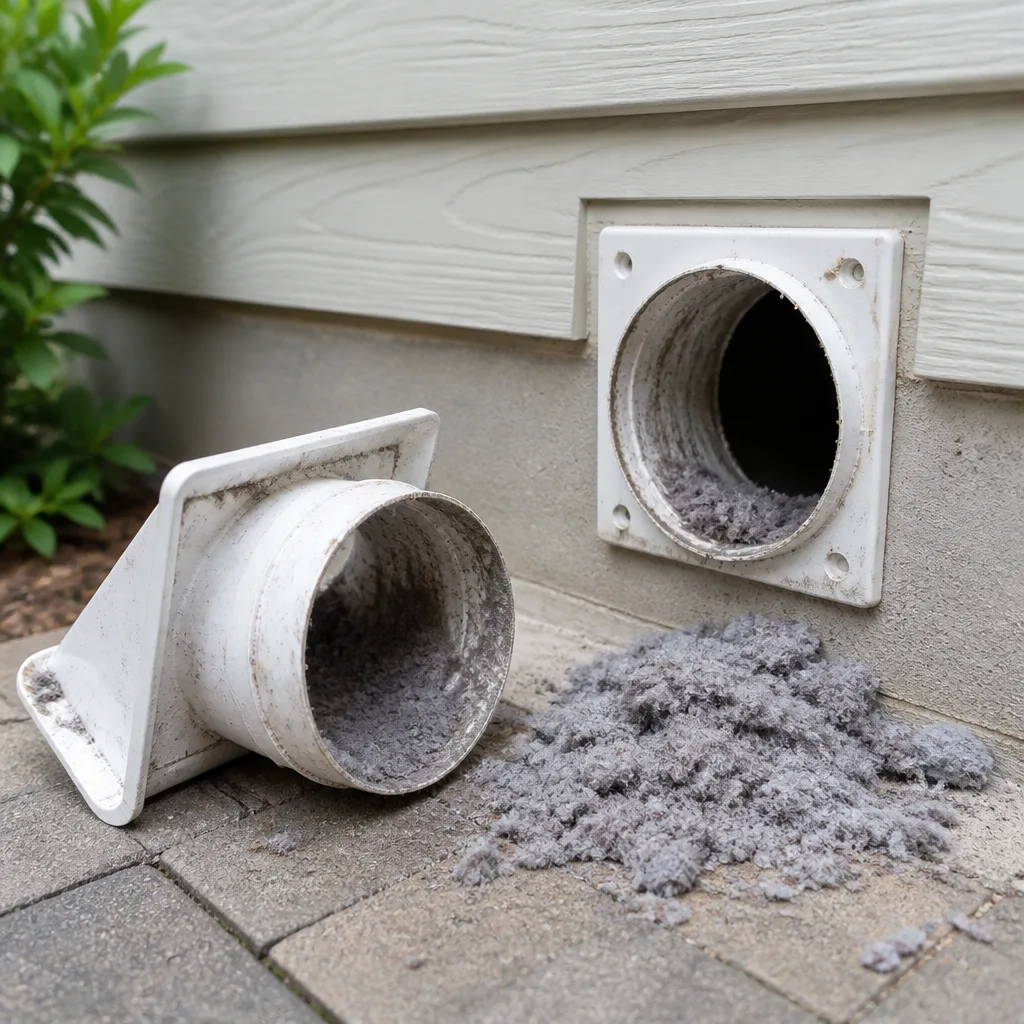 Dryer vent cleaning
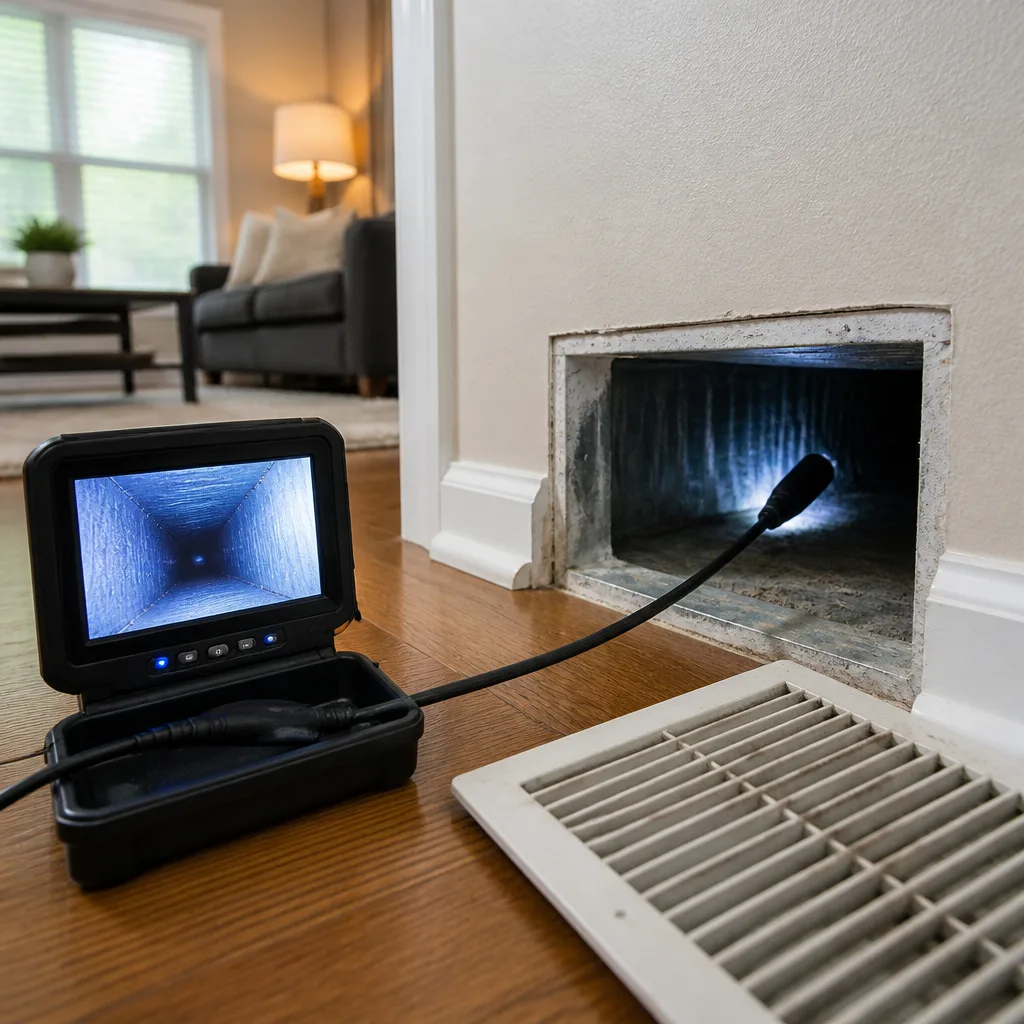 Camera inspection
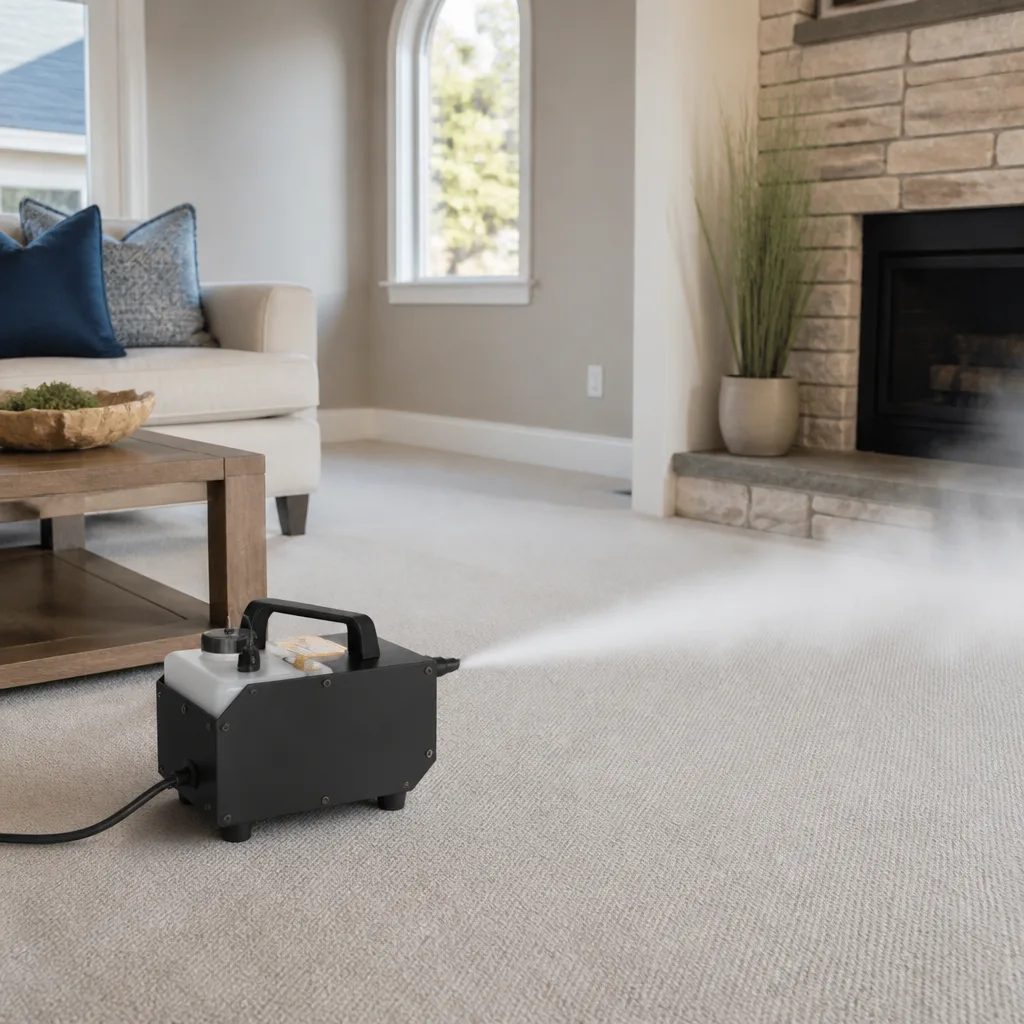 Sanitizing & deodorizing
Whole-system duct and dryer vent check with before-and-after photos - you see exactly what came out of your vents
That "$99 whole-house special" is a bait ad - the real number appears once they are in your hallway, or the "clean" is a shop-vac at the register. We photograph the inside of your ducts before and after instead.
The Complete Guide to Air Duct Cleaning in Harlem
Most Harlem apartments were built before forced-air HVAC existed. The ductwork in these buildings was retrofitted decades after the walls went up, run through chases that were never designed for it, and in many cases tied into systems that started life as steam heat. That single fact changes almost everything about how duct cleaning should be done here, and it’s why a generic “we clean ducts” pitch tends to miss the actual problem zones. This guide maps out what air duct cleaning in Harlem really involves: how building stock shapes access, why urban particulate loads foul systems faster than suburban benchmarks suggest, what equipment tiers exist and which ones suit which building types, and how to read the verification paperwork that separates a real job from a sales call.
Quick Answer
Air duct cleaning in Harlem means cleaning a system that was usually retrofitted into pre-war or mid-century construction, not a system designed with the building. A proper job uses mechanical agitation (Rotobrush or Nikro), negative-air containment with HEPA filtration (Abatement Technologies), and finishes with documented before-and-after evidence of the duct interiors. Because Harlem’s street-level particulate load is heavy and the duct routing is often tight, thorough access work matters more here than in new suburban builds.
Styles & brands we work with
- Whole-home duct cleaning
- Dryer vent cleaning
- Camera inspection
- Sanitizing & deodorizing
Table of Contents
- Why Harlem Buildings Change the Job
- Urban Particulate Load and Duct Fouling
- Equipment Tiers: What Belongs in a Harlem Building
- What a Proper Cleaning Actually Looks Like
- Reading a Post-Cleaning Verification Report
- Duct Cleaning, Liner Condition, and Landlord Obligations
- Beyond Cleaning: Repair, Sanitizing, and Air Quality
- Common Mistakes to Avoid
- When to Call a Professional
Why Harlem Buildings Change the Job
Walk through a Harlem brownstone or a mid-century apartment block and you’ll notice the same thing technicians notice on every first visit: the ductwork doesn’t match the building. Plaster walls, narrow vertical chases, and original structural beams leave very little room for supply trunks and returns. When a building converted from steam radiators to forced air, the installer had to work around what was already there. That produces a handful of predictable conditions that affect cleaning.
- Short, sharp transitions. Duct runs often turn abruptly to clear beams or chimneys. Debris collects at those turns, and a cleaning head that can’t negotiate the turn leaves a pile behind.
- Undersized return chases. Many Harlem buildings have returns squeezed into spaces that were originally plumbing or electrical chases. Access panels may not exist, so a technician has to create safe access points and reseal them properly afterward.
- Mixed-era systems. A single apartment can have original galvanized trunk lines feeding newer flex branches added during a renovation. Each material needs a different cleaning approach; flex duct, in particular, can be damaged by too much brush pressure.
- Plaster dust and construction residue. Older buildings shed fine plaster and masonry dust into any open cavity. When duct joints leak, that dust gets pulled in and settles in the system.
None of this is a reason to skip cleaning. It’s a reason to hire someone who knows how to work around it. A team that arrives with a shop vac and a hose won’t have the reach or the containment to deal with a retrofitted system in Harlem. Contractor-grade mechanical agitation and HEPA containment are the baseline, not the upgrade.
Urban Particulate Load and Duct Fouling
Duct fouling happens faster in dense urban environments than it does in the suburbs. That’s not a marketing claim, it’s the consequence of how HVAC systems work: every return pulls in whatever is suspended in the surrounding air. In Harlem, that includes diesel exhaust from delivery traffic, construction dust from ongoing renovation work across the neighborhood, and fine street-level particulate that gets kicked up and carried indoors.
The practical effect is that a Harlem duct system can accumulate a meaningful layer of settled debris significantly sooner than a suburban homeowner’s intuition suggests. Settled debris then does a few things at once:
- It narrows the effective cross-section of the duct, which makes the blower work harder to deliver the same airflow.
- It becomes a reservoir that releases fine particles every time the system cycles on.
- It holds moisture against duct walls in humid months, which is where microbial growth gets a foothold.
- It coats the blower wheel and evaporator coil, degrading both efficiency and air quality over time.
For Harlem residents and property managers, the takeaway is scheduling. If you’re relying on a suburban neighbor’s “every five to seven years” rule of thumb, you may be waiting too long. Visible dust at registers, a musty smell when the system kicks on, or a noticeable drop in airflow are more reliable signals than the calendar. When those show up in a Harlem apartment, it’s worth getting an assessment rather than waiting for a fixed interval to pass.
A note on filtration
Higher-MERV filters capture more of the incoming particulate, but they also create more static pressure. In an older system with narrow chases, an aggressive filter upgrade can actually reduce airflow and stress the blower. After cleaning, filter choice should be matched to the system’s real capacity, which is one reason we treat air quality as a separate conversation from cleaning rather than selling a filter as an add-on.
Equipment Tiers: What Belongs in a Harlem Building
Duct cleaning equipment falls into a few distinct tiers, and the differences matter more in Harlem than in most places. Here’s how to sort them.
Portable negative-air units
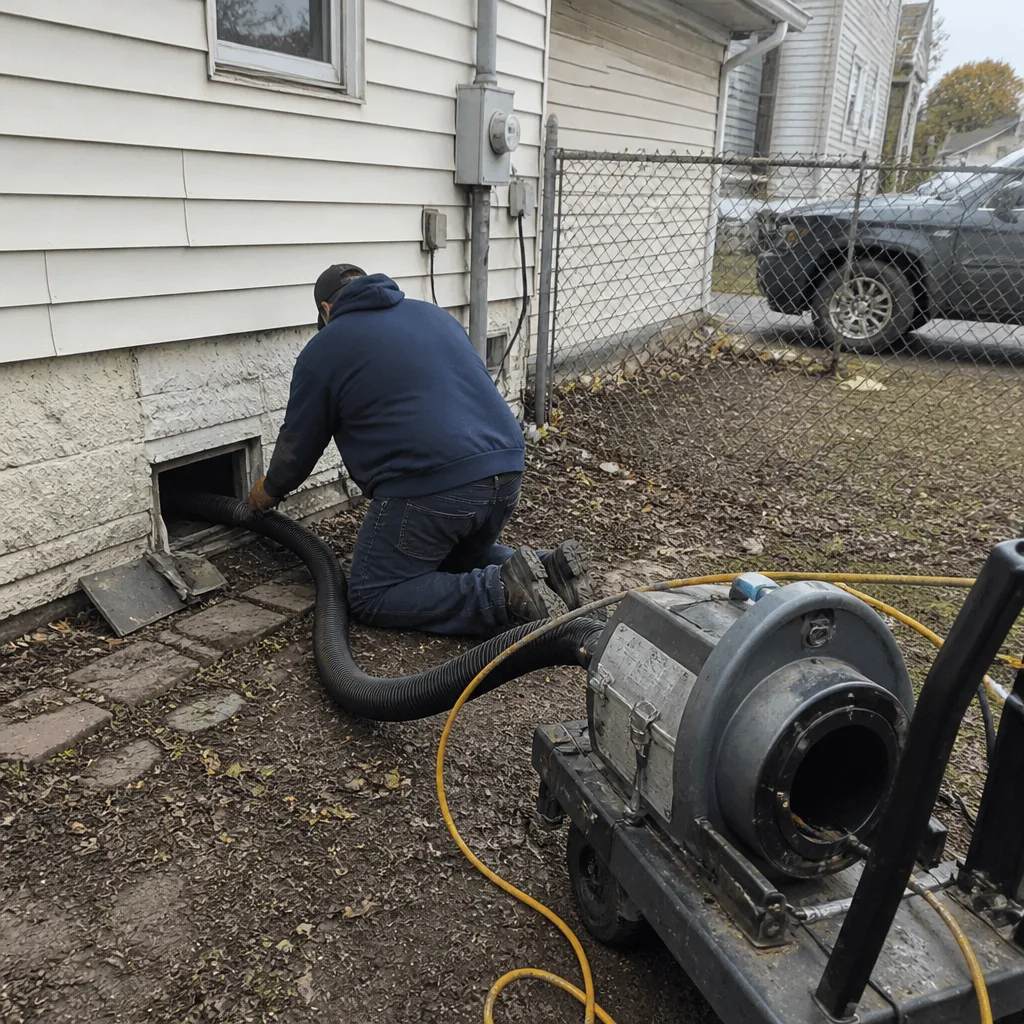
These are HEPA-filtered vacuum units that pull the system under negative pressure while cleaning happens. In an apartment where you can’t park a truck outside and run a hose through three flights of stairs, portable units are often the only realistic containment option. The key is that the unit is genuinely HEPA-filtered and correctly sized for the system volume. An undersized vacuum will let debris escape into the room while the technician is working, which is worse than not cleaning at all.
Truck-mounted negative-air machines
For single-family homes, brownstones with exterior access, or large commercial systems, a truck-mounted unit delivers far more suction and can pull the entire trunk line under strong negative pressure. That’s appropriate when the duct runs are long and access allows it. It’s not automatically better for every Harlem building; it’s better when the building layout supports it. A real assessment covers this before any work is quoted.
Mechanical agitation
Suction alone doesn’t dislodge debris that’s bonded to duct walls. That requires mechanical agitation: brushes, whips, or air-driven tools specifically designed for ductwork. Rotobrush and Nikro systems are purpose-built for this, with heads sized to different duct dimensions and flexible shafts that can negotiate the sharp transitions common in retrofitted Harlem systems. This is where the difference between a specialty company and a generalist becomes obvious.
Air scrubbers and containment
Abatement Technologies air scrubbers and negative-air equipment keep particulate contained during the job rather than redistributing it through the apartment. In a dense building where dust from one unit can migrate into another, containment isn’t a luxury. It’s basic respect for the neighbors.
What a Proper Cleaning Actually Looks Like
A thorough duct cleaning follows a specific sequence. Here’s what the process should look like, whether you’re watching it in a Harlem brownstone or anywhere else.
- Inspection and access planning. The technician identifies all supply and return runs, locates access points (existing or newly created), and maps any areas that need special handling – flex sections, transitions, or damaged segments.
- HVAC unit inspection. Before cleaning the ducts, the air handler, blower, and coil are inspected. A dirty blower reintroduces debris into the system regardless of how clean the ducts are. This connects directly to hvac cleaning, which is a separate but closely related service.
- Containment setup. Negative-air equipment and HEPA filtration are put into place to hold the whole system under pressure and filter the exhausted air.
- Mechanical agitation. Rotobrush and Nikro tools work their way through every run, dislodging settled debris from trunk lines, branches, and register boots.
- Source removal. While the system is under negative pressure, dislodged debris is pulled into the collection unit and extracted.
- Sanitizing. A Guardsman-grade sanitizing treatment is applied post-clean to inhibit microbial growth inside the system.
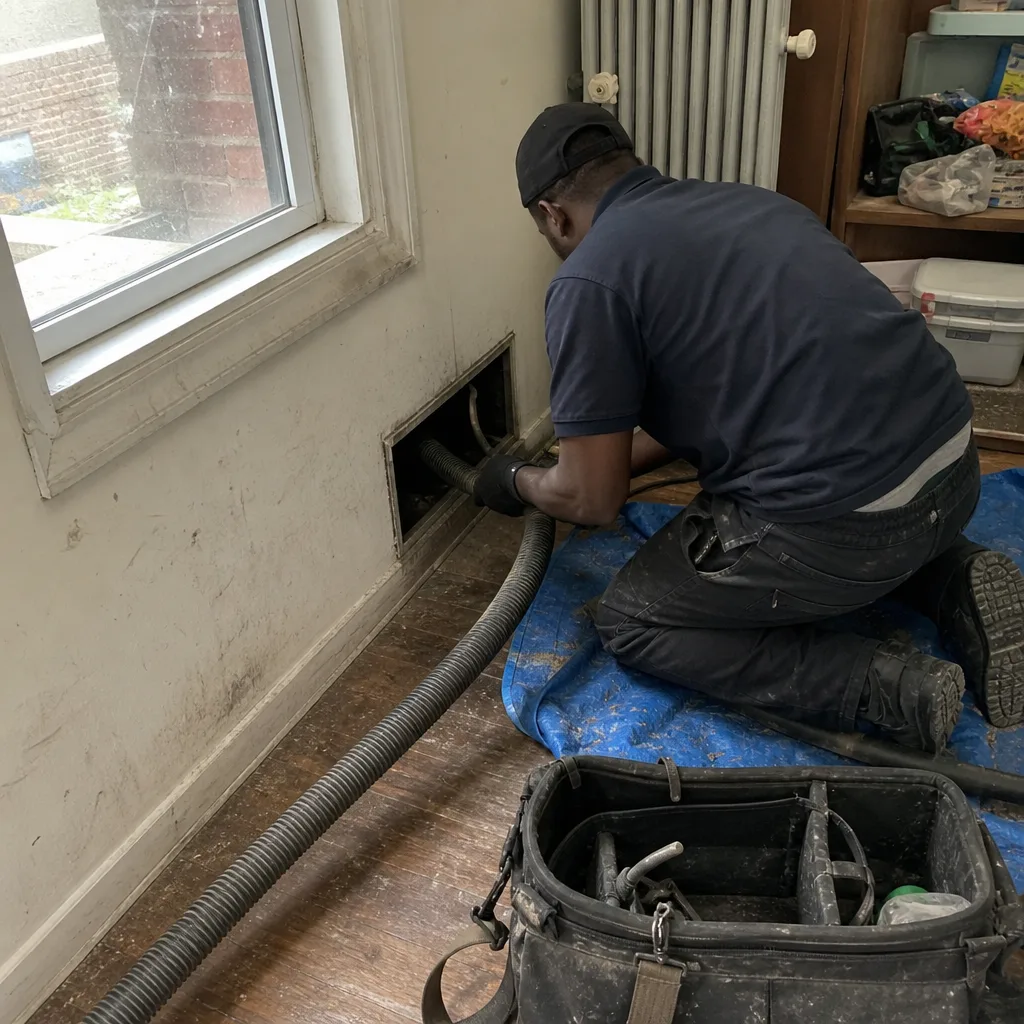
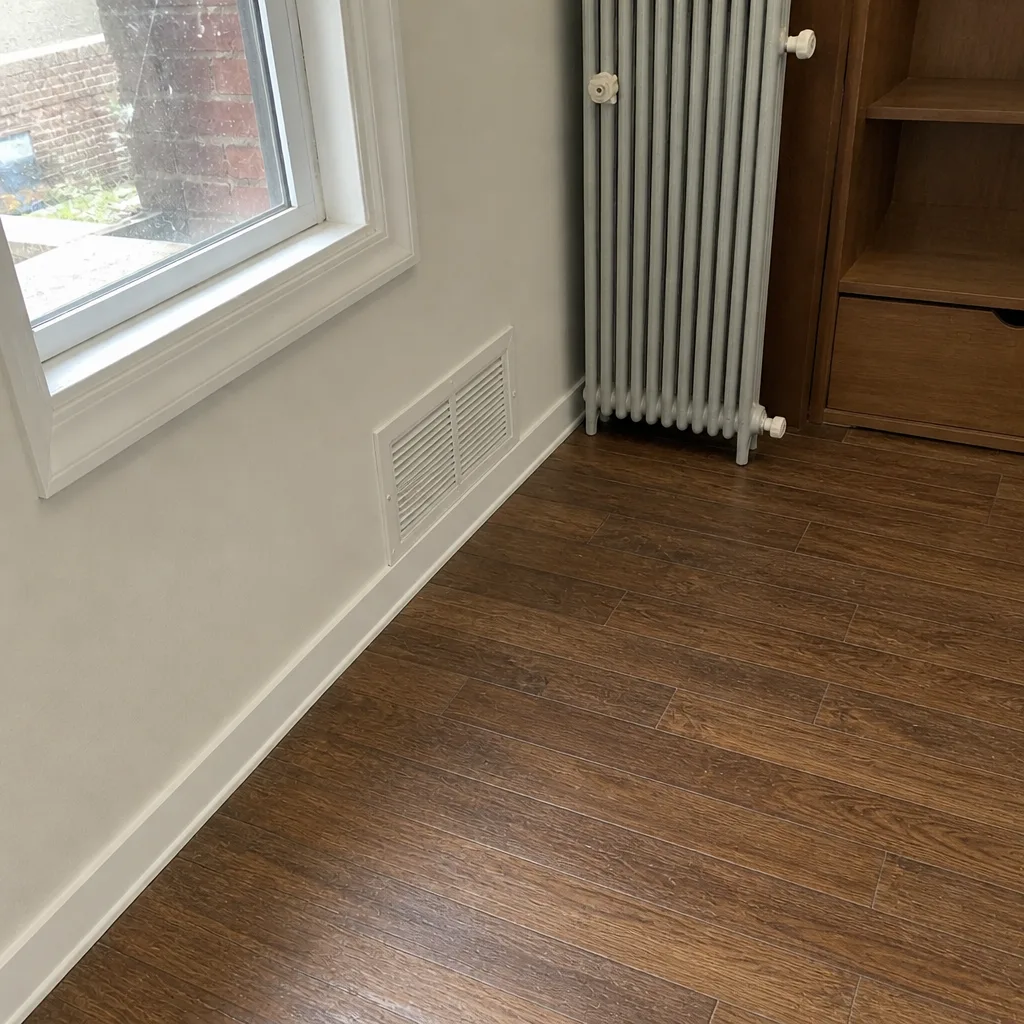
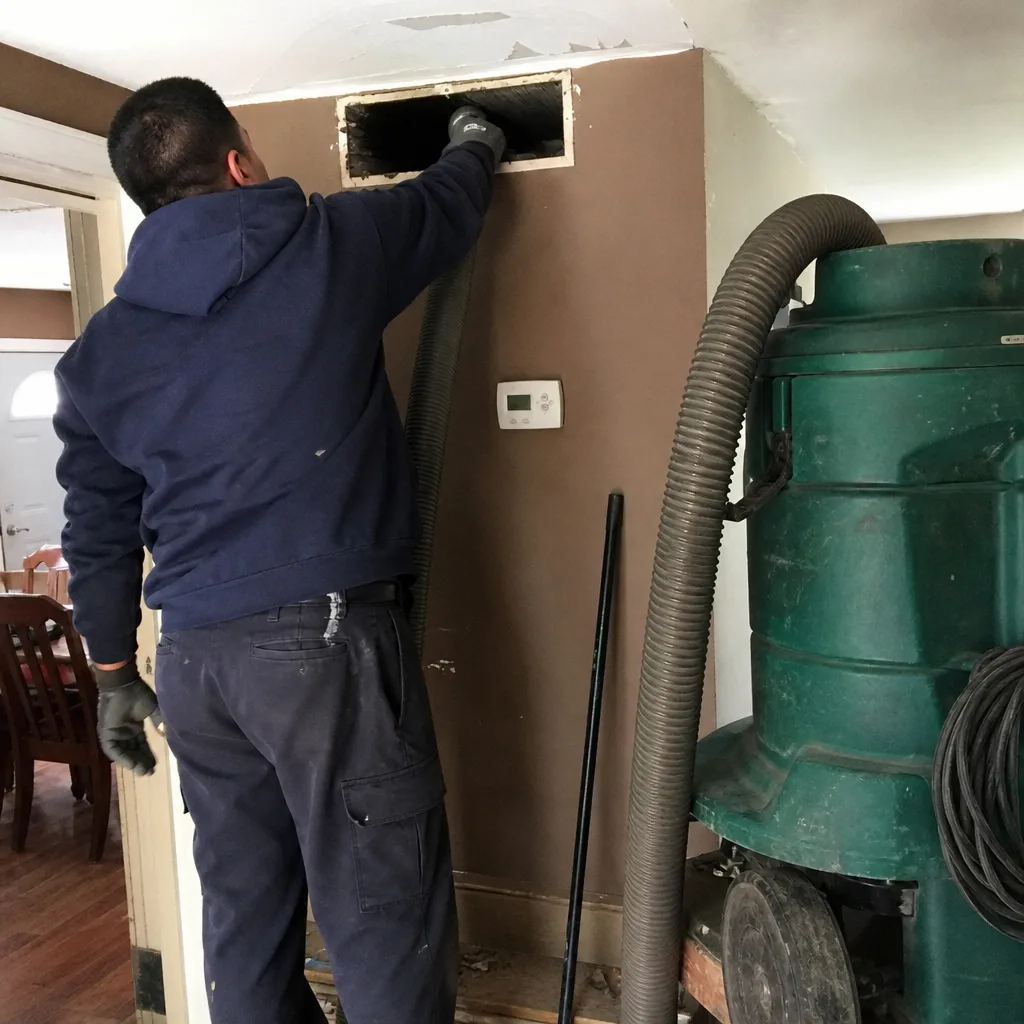
- Verification. Before and after photographs document the interior condition of the ducts at accessible points. The system is reassembled, access panels are sealed, and airflow is checked at the registers.
This is the standard air duct cleaning workflow. It’s not glamorous, but every step matters. Skip containment and you redistribute dust. Skip agitation and you leave the bonded layer behind. Skip verification and nobody actually knows what happened.
Reading a Post-Cleaning Verification Report
Verification is where a real duct cleaning job separates itself from a sales transaction. A NADCA-aligned job documents the before-and-after condition of the system with evidence you can look at. Here’s what a report should include.
- Photographic before-and-after evidence of the duct interiors at multiple access points. The photos should be clear, dated, and taken from the same location for the before and after to be comparable.
- Named cleaning methods. What equipment was used, whether agitation was mechanical or pneumatic, and how containment was handled.
- List of access points created and resealed, including material used for resealing. A technician who cuts into an original plaster wall owes you a proper seal afterward.
- Condition notes on duct materials. Any flex sections, damaged segments, or liner issues that need addressing should be documented here.
- Sanitizing product and method, if sanitizing was performed. Guardsman-grade treatments are documented specifically because they’re a verifiable product category.
What to look for
The single most useful thing you can do when you receive a report is compare the before-and-after photos at each access point. If the “before” is a close shot of a dusty duct and the “after” is a wider shot that doesn’t quite line up, that’s a red flag. A thorough report shows the same point in the same duct, and it shows the residue inside the collection unit so you can confirm that debris actually left the system.
Duct Cleaning, Liner Condition, and Landlord Obligations
Property managers in Harlem carry a different set of considerations from owner-occupants. NYC’s Housing Maintenance Code requires that rental units be maintained in a condition fit for human habitation, and while duct cleaning isn’t a named obligation in most of that code, air quality and system condition fall squarely within a landlord’s maintenance responsibilities. A chronically dirty system that produces visible dust, musty odors, or complaints from tenants is a maintenance issue that should be documented and addressed.
There are three areas where duct work and landlord obligations overlap:
- Liner condition. Older ductwork may have interior insulation or acoustic lining. When that lining degrades, it releases fibers into the airstream and becomes a potential air quality issue. A cleaning assessment should note liner condition and flag any damage that needs repair rather than just cleaning.
- Duct sealing and leak integrity. Leaking joints pull dust from wall cavities and send conditioned air into the wrong place. In a shared building, leaks can also transfer odors and particulates between units through chase cavities.
- Documentation. Whether for compliance, tenant communication, or insurance, before-and-after documentation of duct condition is worth keeping in the building file.
For property managers covering multiple units, coordinating cleaning across a building at once is usually more efficient than working apartment by apartment. This is one reason the five-service scope matters: cleaning, HVAC unit service, duct repair and sealing, sanitizing, and post-clean air quality upgrades can be scheduled together rather than by separate vendors. It’s also worth remembering that dryer vent cleaning belongs in the same building maintenance conversation, since blocked dryer vents are a leading cause of residential fires and are a code-compliance issue in their own right.
Beyond Cleaning: Repair, Sanitizing, and Air Quality
Cleaning is the start of a process, not the end of one. A Harlem duct system that’s been properly cleaned is a system you can then improve, and there are three upgrades that make sense afterward.
Duct repair and sealing
Cleaning reveals things: gaps at joints, disconnected branches, crushed flex, or failing seam tape. Repairing and sealing those points after cleaning keeps the system from re-fouling as quickly and keeps conditioned air where it’s supposed to go. Sealing is especially valuable in older Harlem buildings where ductwork passes through unconditioned cavities.
Sanitizing
Post-cleaning sanitizing with a Guardsman-grade treatment targets the microbial layer that agitation can’t fully remove. It’s a specific product category, applied specifically to the duct interior, and documented as part of the job. Sanitizing is complementary to cleaning – it doesn’t replace the mechanical work, it extends the result.
Air quality upgrades
Honeywell and Aprilaire whole-home air quality systems handle filtration, humidity control, and ventilation. These are appropriate choices for Harlem buildings because they address the ongoing particulate load rather than just the accumulated debris. If the goal is healthier air rather than just cleaner ducts, this is the layer that pushes a one-time cleaning into a sustained condition. Every service we offer, from cleaning through air quality upgrades, can be coordinated with one specialized team so it stays one project rather than a chain of contractors.
Common Mistakes to Avoid
- Hiring on price alone. A very low quote almost always means a shop vac, no containment, and a technician who can’t reach the far end of the trunk. In an older Harlem building, that combination leaves most of the debris exactly where it started, redistributed.
- Skipping containment. If the technician doesn’t set up negative-air equipment before starting, they’re blowing dust into the apartment. A thorough cleaning protects the indoor air during the job, not just after.
- Ignoring the air handler. A clean duct system fed by a dirty blower wheel and evaporator coil refouls quickly. Cleaning the ducts but not the HVAC unit is a partial job.
- Assuming a suburban cleaning schedule applies. Urban particulate loads are heavier, and Harlem’s building stock adds its own debris sources. Signs like visible register dust, musty odor, and reduced airflow are more useful than the calendar.
- Skipping verification. If a company can’t show before-and-after photographs of your duct interiors, you have no way of knowing what happened. Ask for documentation before booking.
- Forgetting the dryer vent. Dryer vent cleaning is a fire-safety service, and in dense buildings, a blocked vent affects everyone. It belongs on the maintenance schedule, not in the “later” pile.
- Upgrading filtration without checking the system. Adding a high-MERV filter to an older, narrow-chase system can reduce airflow and stress the blower. Match filtration to the system’s actual capacity.
When to Call a Professional
Not every dust complaint needs a cleaning. But several specific conditions call for a real assessment, and they show up often in Harlem. Call a professional if you’re seeing visible dust buildup at the registers that returns within days of cleaning them by hand, if the system produces a musty or stale smell when it kicks on, or if airflow has dropped noticeably across multiple rooms. You should also call if a recent renovation left fine dust and construction residue in the adjacent ducts, if you’re managing a rental unit and tenants are reporting persistent air quality complaints, or if it’s been several years since the system was last cleaned and you don’t have documentation. Air Duct Cleaning Harlem offers free estimates in Harlem – call (866) 937-8817. We answer 24/7. Fast dispatch from 7am to 7pm, Sunday through Friday.
See the difference
 Before
 After
 Before
 After
 Before
 After
Frequently Asked Questions
Duct cleaning in Harlem is priced per system, not per vent, and the written estimate sets the final price after the technician assesses access, number of runs, and system condition. Pre-war and retrofitted systems often have tighter chases and more access points than newer construction, which affects the estimate. Call (866) 937-8817 for an exact quote – estimates are free.
Cheap quotes usually reflect missing equipment: no HEPA containment, no mechanical agitation, and sometimes no verification photographs. That approach redistributes debris inside the apartment instead of removing it. A quote that can’t name the equipment and process is a quote worth questioning. Call (866) 937-8817 to talk through what a proper job involves.
Most Harlem systems benefit from cleaning sooner than the five-to-seven-year interval common in suburban homes, because urban particulate loads are heavier and older buildings add dust from wall cavities and renovation work. Watch for visible register dust, musty smells, and airflow changes as more reliable signals than a fixed calendar. Call (866) 937-8817 for an assessment if you’re unsure.
It can help significantly, but only if the job includes sealing any leaks afterward. Cleaning removes the accumulated reservoir; sealing keeps the system from pulling plaster dust and cavity debris back in. Skipping the sealing step shortens the benefit considerably.
Yes, and it’s worth keeping in the building file. A post-cleaning report with dated before-and-after photographs, named methods and equipment, access point records, and liner condition notes gives you a verifiable record of maintenance. That’s useful for tenant communication, insurance, and general building records.
Often, yes, if the smell is coming from the duct interior. Cleaning removes the settled debris that holds moisture and microbial growth, and post-clean sanitizing with a Guardsman-grade treatment targets the remaining microbial layer. If the smell persists after cleaning, it usually points to moisture in the air handler or evaporator coil, which is where HVAC cleaning comes in.
The Bottom Line
Air duct cleaning in Harlem isn’t a generic service applied to a generic building stock. Pre-war and mid-century construction, retrofitted duct routing, and heavy urban particulate loads mean the job requires a specific technical approach: mechanical agitation with Rotobrush or Nikro tools, HEPA negative-air containment from Abatement Technologies, and post-clean verification with documented before-and-after evidence. Cleaning, duct repair and sealing, sanitizing, and air quality upgrades fit together as one system, and handling them with one specialized team keeps the work coherent. Whether you’re a homeowner or a property manager, the decision that matters is choosing a job you can verify rather than a price you can’t. For a free estimate in Harlem, call (866) 937-8817. We answer 24/7. Fast dispatch from 7am to 7pm, Sunday through Friday.
Written by the team at Air Duct Cleaning Harlem.