
Last updated November 22, 2026
 Whole-home duct cleaning
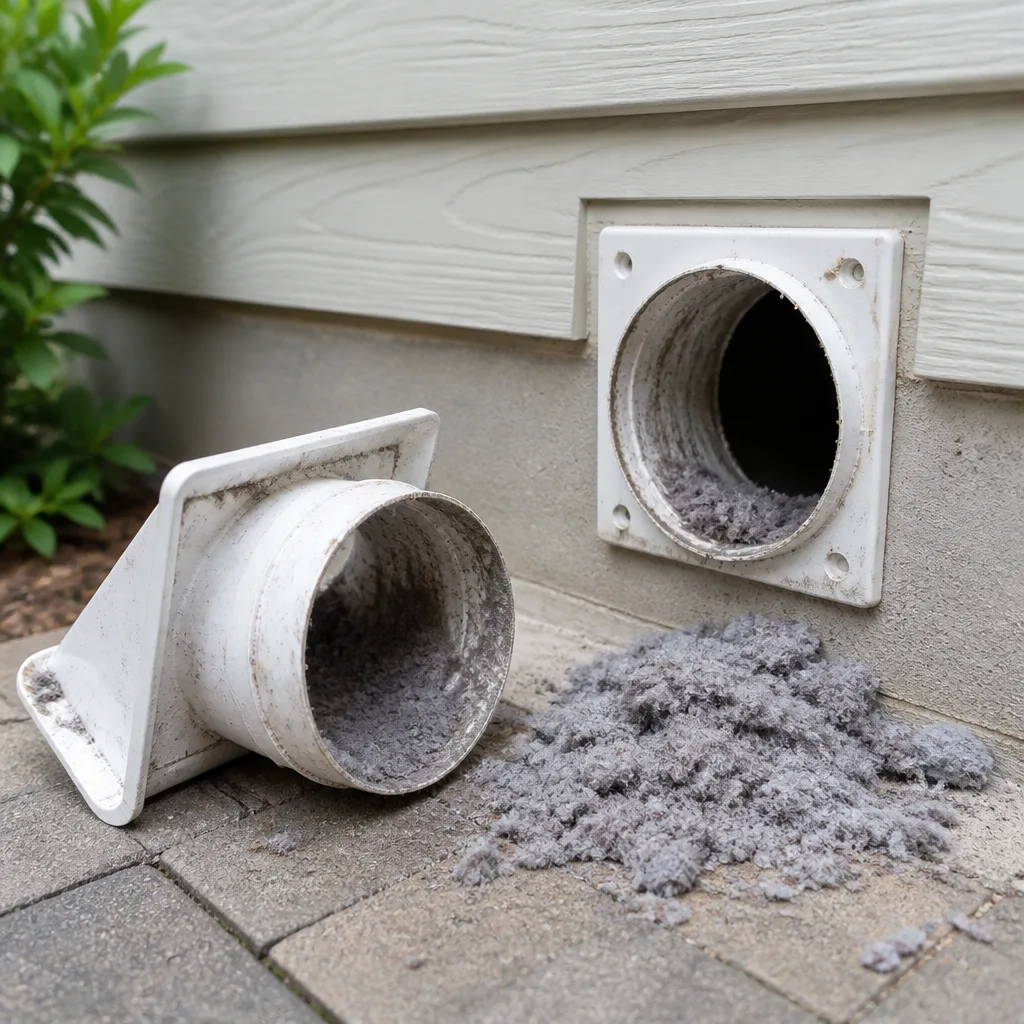 Dryer vent cleaning
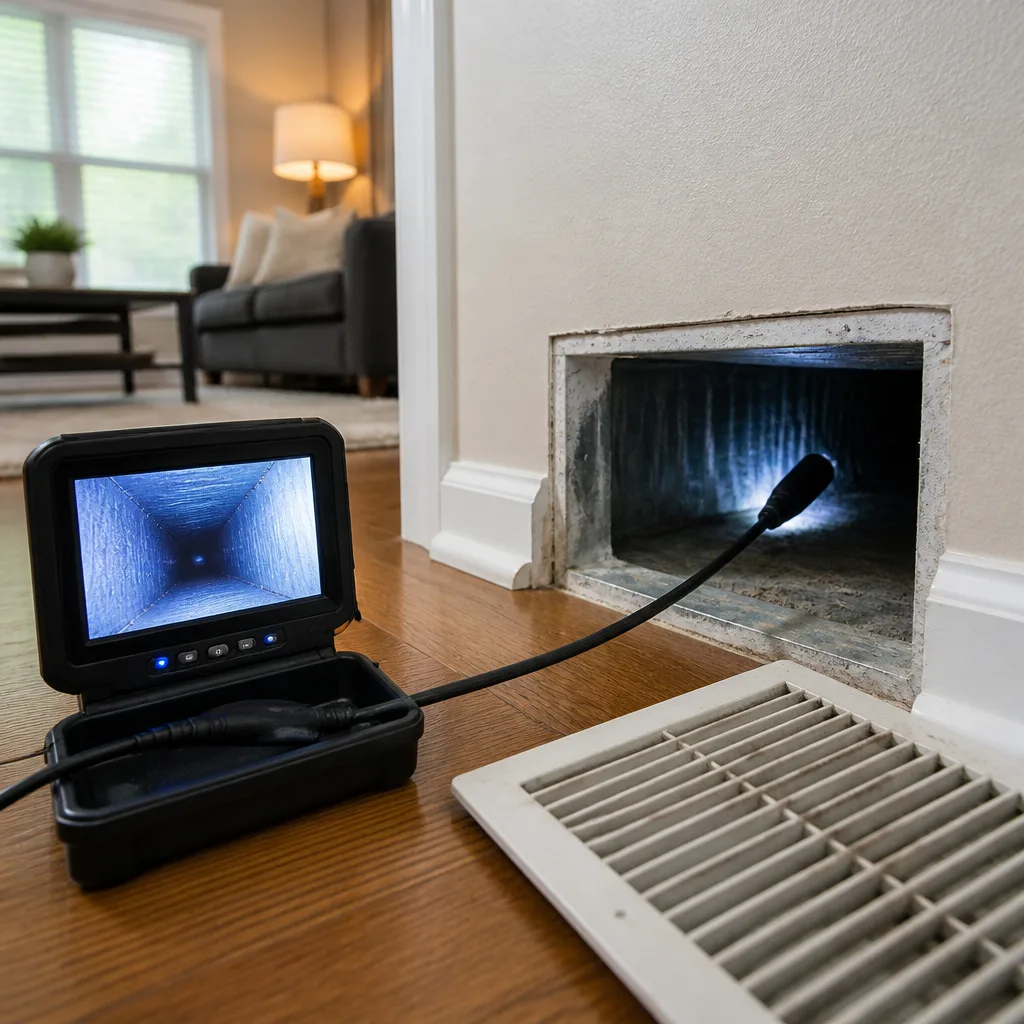 Camera inspection
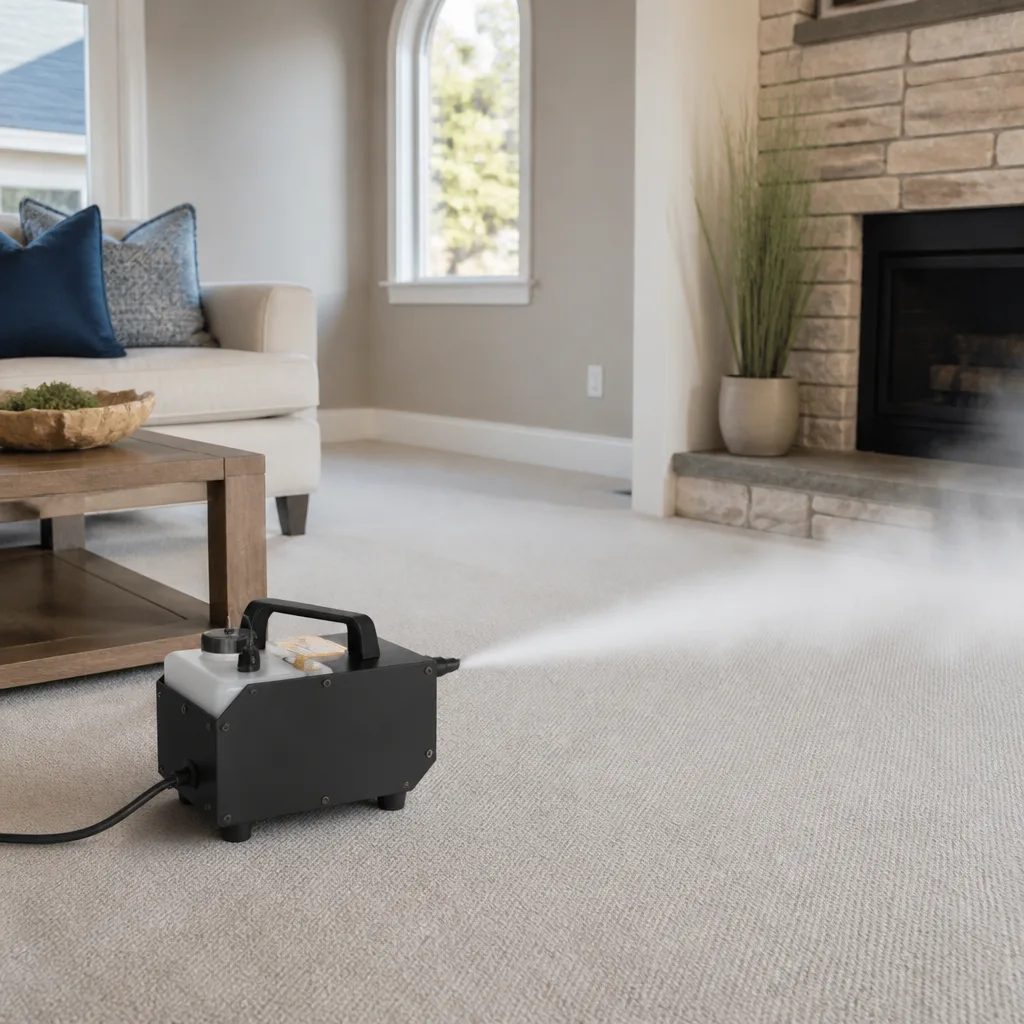 Sanitizing & deodorizing
Whole-system duct and dryer vent check with before-and-after photos - you see exactly what came out of your vents
That "$99 whole-house special" is a bait ad - the real number appears once they are in your hallway, or the "clean" is a shop-vac at the register. We photograph the inside of your ducts before and after instead.
Air Duct Cleaning Warning Signs: A Harlem Homeowner’s Reference Guide
Dust on a register grille looks like a housekeeping issue. Dust on a register grille plus rising allergy symptoms plus a musty smell after the heat kicks on is a duct system telling you something specific: the pattern, not any single sign, is what matters. Most Harlem homeowners wait for something dramatic before calling anyone, and by then a cleaning job has often become a repair job. This guide teaches you to read the cluster of ordinary signals that add up to a system overdue for attention. We’ll cover what each sign means, how to log them, what’s unique to Harlem’s prewar and mid-century buildings, and how to tell a cleaning need from a repair need.
Quick Answer
Air ducts usually need cleaning or repair when you see a cluster of symptoms rather than one isolated issue: visible debris at supply registers, rooms that never heat or cool evenly, filters loading faster than they used to, odors on startup, and worsening allergy symptoms indoors. In Harlem’s older buildings, plaster dust from nearby renovation work, rodent activity in wall chases, and failing duct tape at pre-code joints are additional warning signs specific to the housing stock.
Styles & brands we work with
- Whole-home duct cleaning
- Dryer vent cleaning
- Camera inspection
- Sanitizing & deodorizing
Table of Contents
- The Five-Signal Cluster: How to Log a Diagnostic Pattern
- Mold vs. Dust at Registers: Why the Distinction Matters
- Warning Signs Specific to Harlem’s Older Housing Stock
- Dryer Vent Warning Signs and Fire Safety
- Cleaning Need vs. Repair Need: How to Tell the Difference
- A Room-by-Room Walkthrough Checklist
- What a Professional Duct Cleaning Actually Involves
The Five-Signal Cluster: How to Log a Diagnostic Pattern
One warning sign is a data point. Five overlapping warning signs form a pattern, and patterns are what indicate a duct system that’s genuinely overdue. Rather than reacting to any single annoyance, treat the following as a set and observe how many of them you’re seeing at the same time.
- Visible debris at supply registers. Dark streaks, buildup on the grille, or a puff of dust when the system starts is a sign of material in the duct run reaching the register face. Light surface dust is normal; heavy, recurring streaks suggest the ducts themselves are loaded.
- Uneven room temperatures. A back bedroom that’s cold when the front room is warm often points to a duct that’s leaking, blocked, or poorly balanced. In Harlem walk-ups with long horizontal runs along an exterior wall, this is a common complaint.
- Accelerated filter loading. If your filters used to last three months and now they look gray at one, something is introducing more particulate into the return side. That could be a leak sucking in crawlspace or chase air, or simply heavy buildup in the system.
- Odors on startup. A musty, dusty, or “gym bag” smell that hits when the fan kicks on is material sitting in the ductwork being disturbed. A smell that lingers independently of the fan is more likely a moisture problem somewhere else.
- Increased allergy symptoms indoors. If you feel worse inside than outside, and it tracks with the system running, the airways are a reasonable place to look next.
Log the signs with dates in a simple notebook or phone note. A pattern observed over two to three weeks tells you far more than a single observation on one morning, and it also gives a technician something concrete to work with. In our experience, homeowners who arrive with a written pattern get a straighter answer about whether cleaning alone will solve the issue. If you want a professional’s read on what you’ve logged, air duct cleaning is the place to start.
Mold vs. Dust at Registers: Why the Distinction Matters
Dark growth at a supply register is either dust or mold, and the two need different responses. Dust is dark, dry, and smears uniformly when wiped; it comes back gradually. Mold appears as patchy spotting, often with a greenish or black cast, and it comes back quickly after cleaning, sometimes within days. It may also sit in a ring or blotch pattern near the register frame where condensation collects.
The reason the distinction matters before you call anyone is scope. A dusty register is a cleaning issue. A register with active mold growth is a moisture issue, and cleaning without finding and fixing the moisture source will not keep it from returning. That moisture can come from a leaking condensate line, a humidifier fault, high bathroom or kitchen humidity reaching a return, or an exterior-wall duct sweating in cold weather.
Three practical checks help before you call:
- Wipe test. Wipe a small section with a white paper towel. Uniformly dark and dry? Probably dust. Streaky, patchy, or slightly damp? Flag it for closer inspection.
- Smell test. Dust smells faintly of dry dirt. Mold has an earthy or musty smell that’s often strongest right at the register.
- Location test. Mold likes moisture. If the affected register is near a bathroom, kitchen, or an exterior wall, treat it as a moisture question first.
Mold remediation and air quality work is not a do-it-yourself project. We recommend a trained professional inspect any register where you suspect active mold, because the fix usually involves both treating the surface and correcting the moisture source. In Harlem buildings with shared walls and older plumbing stacks, moisture can travel between units and show up in surprisingly distant duct runs.
Warning Signs Specific to Harlem’s Older Housing Stock
Harlem’s housing mix – prewar brownstones and townhouses, mid-century apartment buildings, and a steady stream of gut renovations – creates warning signs you won’t see in a newer suburban house. These are worth watching for specifically.
Plaster dust from renovation neighbors
If a neighboring unit or nearby building is under renovation, fine plaster dust can infiltrate shared chases and travel into your duct runs. It’s finer and more abrasive than ordinary household dust, and it loads filters quickly. If your filter is suddenly dark within weeks of a neighbor’s renovation starting, that’s a strong signal. Watch for the filter color change, then compare with when work started next door.
Rodent activity in wall chases adjacent to ducts
Older Harlem buildings have wall chases and interstitial spaces that rodents use as travel routes. Ducts running alongside those chases become a drop zone for droppings, nesting material, and dander. The signature signs are a musky smell that’s strongest near a specific register, and small dark debris visible at the register face. This isn’t a pest-control problem alone; even after pests are removed, the duct run needs professional cleaning, and in some cases sanitizing.
Failed duct tape at pre-code joints
Many older systems were sealed with cloth-backed duct tape that eventually fails – it goes brittle, loses adhesion, and peels. A failing joint leaks air into the chase and pulls dust in from it. Walk your visible duct runs in a basement, utility closet, or ceiling plenum and look for curling tape, dark dust lines at seams, and visible gaps. Failed joints are a repair need, not just a cleaning need. If you find them, Air Duct Cleaning Harlem covers the sealing and repair side alongside the cleaning.
Dryer Vent Warning Signs and Fire Safety
Dryer vents are a fire risk, not an afterthought, and they give you some of the clearest warning signs of any part of your home’s ventilation. Lint is highly flammable, and a vent that’s restricted by buildup keeps heat in the dryer. Watch for three specific signs:
- Loads taking longer to dry. If a cycle that used to finish in one pass now needs two, the vent is the first place to check. A gradual lengthening over months is more telling than a sudden jump.
- Exterior vent flap not opening fully. Step outside while the dryer is running. The flap should swing open with visible force. If it barely moves, lifts partway, or stays mostly closed, airflow is restricted somewhere in the run.
- Lint around the dryer cabinet. Lint collecting behind the dryer, at the wall connection, or around the cabinet edges is a sign of a leak or a backed-up run. A little lint behind the dryer is normal; a visible pile is not.
In Harlem’s older apartments, dryer vents frequently run long horizontal distances to a rear facade or a shared exterior wall, and older runs sometimes corkscrew up through interior walls. Long, elbow-heavy runs are the ones most likely to trap lint. The fire-safety implication is not theoretical: dryer vent lint is a leading cause of residential fires, which is why a dedicated dryer vent cleaning visit is worth scheduling even when nothing feels obviously wrong.
If any of the three signs are present, treat it as a safety item and get it looked at before running another cycle.
Cleaning Need vs. Repair Need: How to Tell the Difference
Cleaning removes what’s inside the ducts. Repair corrects the duct system itself – sealed joints, patched runs, corrected support, and reconnected registers. The distinction determines whether cleaning alone will solve your problem or whether you’ll be calling someone back in a few months.
Here’s a practical diagnostic:
- Signs that point to cleaning only. Debris at registers with no visible gaps; a musty smell that goes away after the system has run for several minutes; filters that load fast but no visible dust at seams.
- Signs that point to repair. Dark dust lines at duct seams; peeling, curling, or missing tape at joints; duct sections that have come apart (often visible in a basement or utility closet); a single room that never heats or cools no matter what you do with the thermostat; a hiss or whistle from a duct run.
- Signs that point to both. Heavy debris in the ducts plus visible joint failure; a rodent-affected run that also has separated sections; any ductwork that’s been wet.
In practice, most older Harlem systems that show strong warning signs need some sealing alongside cleaning. A wet duct run needs repair and sanitizing, not just a pass with a vacuum. When you book a professional inspection, ask explicitly whether the run needs repair before or after cleaning. A thorough inspection answers this without guesswork.
A Room-by-Room Walkthrough Checklist
Run this walkthrough once per season, ideally before heating season in the fall. A clipboard or phone note makes it easy to compare year to year, which is where the pattern emerges.
- Registers first. In each room, remove the register grille and inspect with a flashlight for debris, streaks, and any patchy growth. Note the location of any dark growth and whether it’s near a bathroom, kitchen, or exterior wall.
- Returns next. Return grilles often show the heaviest buildup. Note filter color and how long it’s been installed.
- Bedrooms and back rooms last. These are where temperature imbalance shows most clearly. Note whether the room reaches the thermostat setpoint on a normal day, or consistently runs a few degrees off.
- Basement and utility closet. Walk the visible duct runs. Look for peeling tape, dark seam lines, and unsupported sections that sag.
- Dryer, if you have one. Check the exterior flap with the dryer running. Note cycle lengths over a week. Look behind the cabinet for lint.
- Record dates and observations. Even three notes per sign per season creates a clear pattern.
Once you’ve run through this, compare notes with what you’d describe to a technician. Anything that appears on the list in two consecutive seasons is worth a professional inspection. For ducts that come up repeatedly, HVAC cleaning – covered under HVAC cleaning – often addresses both the ducts and the air handler at the same time.
What a Professional Duct Cleaning Actually Involves
Containment is the piece most homeowners don’t think to ask about, and it’s the piece that determines whether the job is done correctly. A vacuum connected to one end of the system pulls debris toward it, but without containment, the rest of the house is exposed to what the vacuum disturbs. Professional cleaning starts by containing the work area.
Here’s what a proper cleaning looks like:
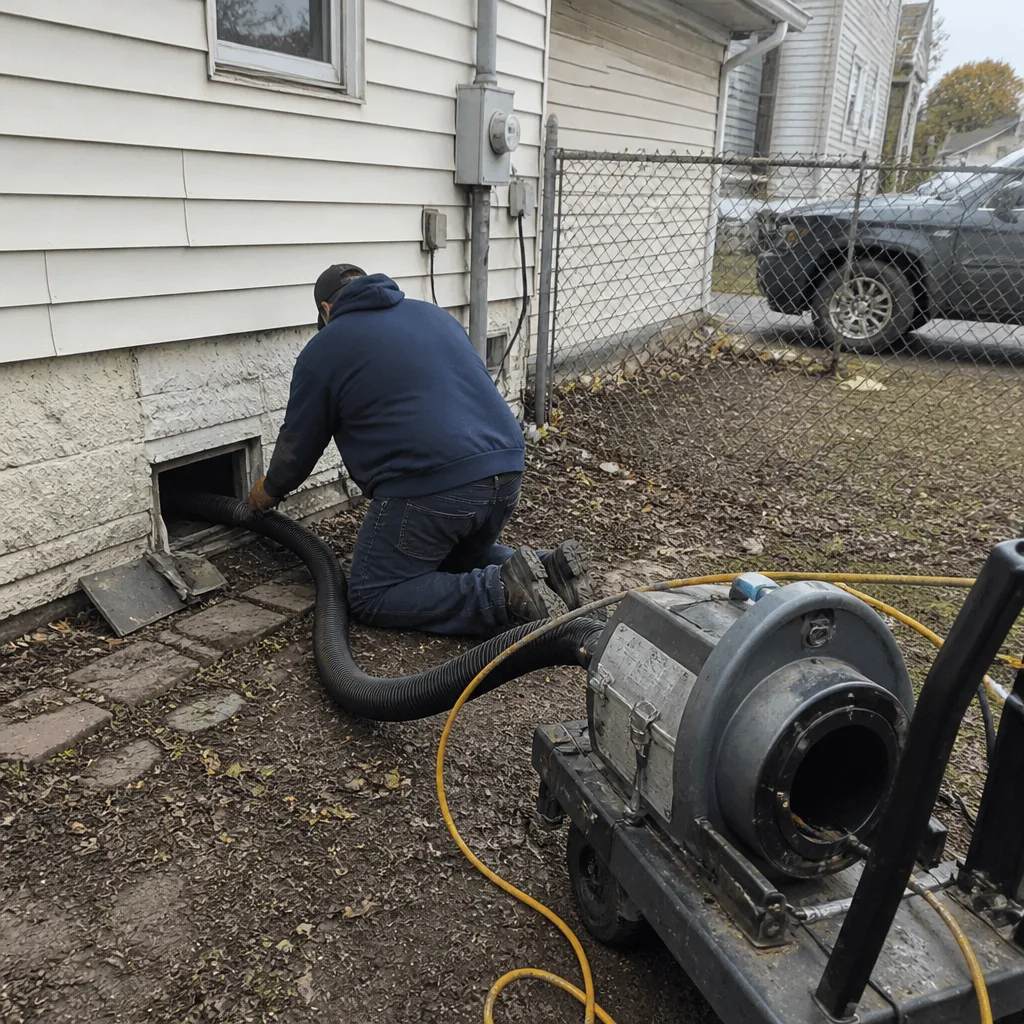
- Containment setup. Negative-air equipment – the kind of Abatement Technologies gear used for indoor air work – goes up before any agitation starts, holding dust and particulate inside the work zone rather than letting it redistribute through the home.
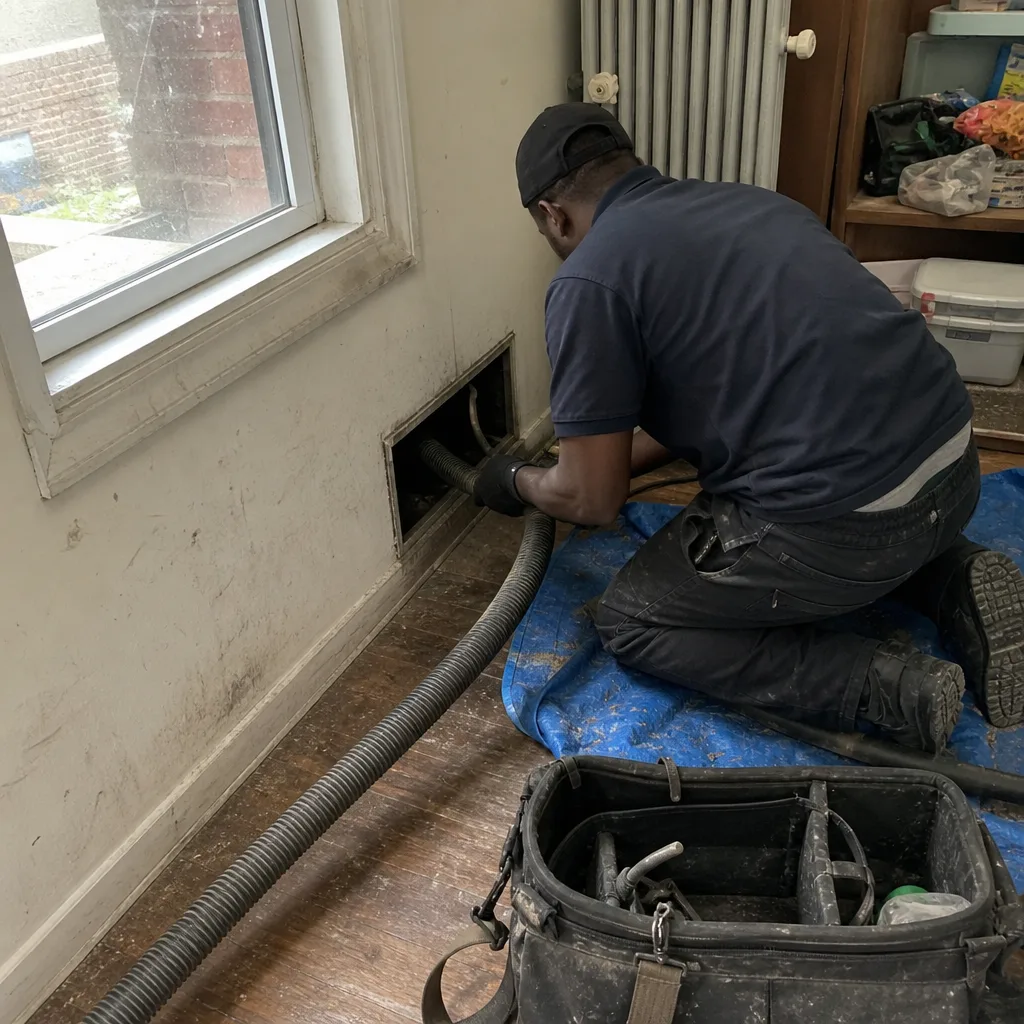
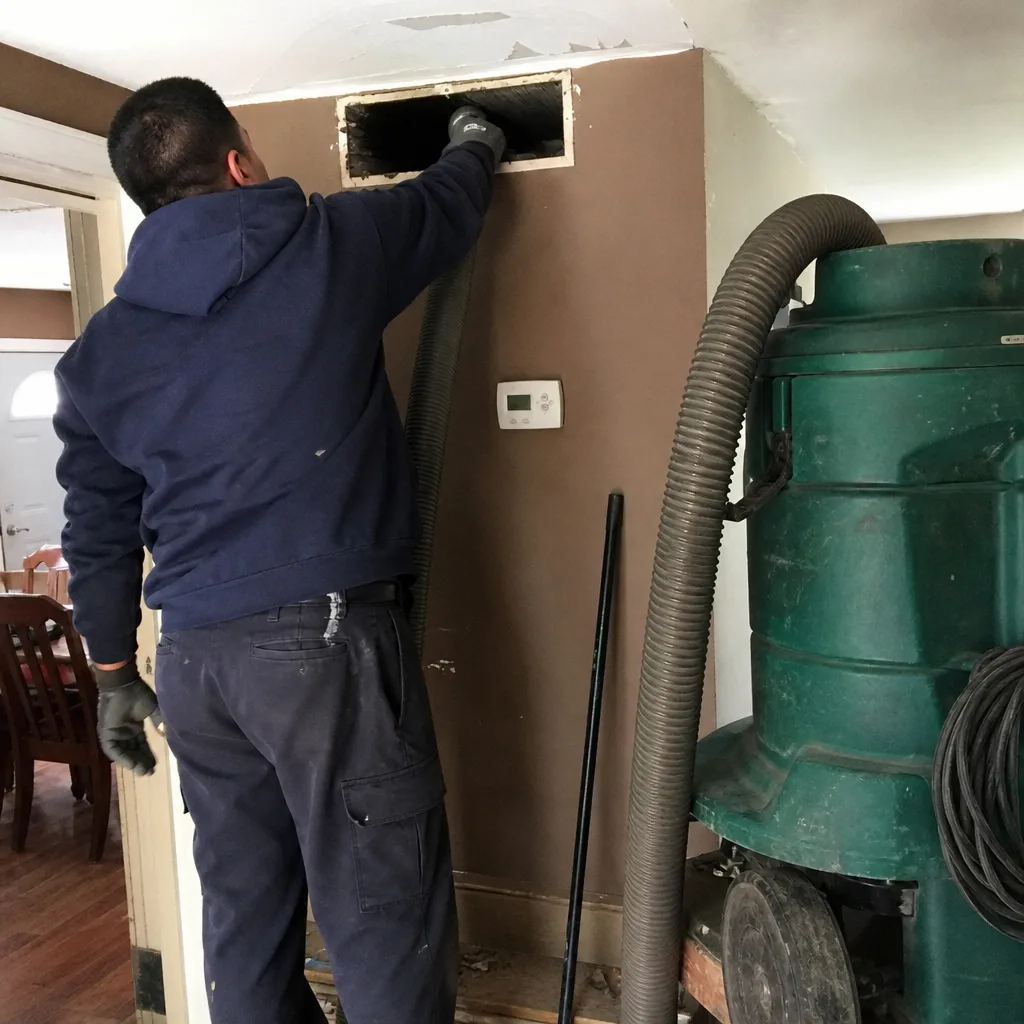
- Mechanical agitation. Rotobrush and Nikro systems are purpose-built for ductwork: rotary brushes and whips that scrub the interior surfaces where buildup actually clings. A shop vacuum cannot reach into the walls of a duct run.
- Post-clean inspection. Before-and-after visual confirmation of the duct interior is the standard. Ask for it.
- Sanitizing. Guardsman-grade treatments applied after cleaning inhibit microbial growth inside the system, which matters most when a run has been wet or rodent-affected.
- Air quality options. For homeowners who want to move from a one-time clean to a long-term healthy-air setup, whole-home systems from Honeywell and Aprilaire pair with cleaning and sealing to keep the system cleaner year to year.
If you’re comparing quotes, the containment question is the fastest way to sort them. A contractor who describes Rotobrush or Nikro equipment and negative-air containment is running a professional job. A quote that just says “we’ll vacuum your ducts” is not. Our team brings Rotobrush, Nikro, and Abatement Technologies equipment on every job, and our technicians have up to 10 years of experience with them. If your walkthrough found warning signs worth a professional eye, call (866) 937-8817 for a free estimate.
Common Mistakes to Avoid
- Treating one warning sign as the whole story. A dusty register by itself is not a duct emergency. Look at the cluster, log it over two to three weeks, and only then decide. Acting on a single observation leads to either premature spending or missed diagnosis.
- Confusing dust with mold and cleaning without finding the moisture source. If growth returns within days of cleaning a register face, moisture is the real problem. Cleaning the visible symptom without addressing the source wastes the visit.
- Ignoring failed duct tape in older Harlem systems. Cloth-backed tape goes brittle with age. A curling joint isn’t cosmetic – it’s pulling unfiltered chase air into your supply run and loading your filters faster.
- Skipping the dryer vent check because the dryer “still works.” A dryer that takes two cycles to dry a load is a fire-safety warning sign, not a scheduling inconvenience. Long horizontal or corkscrew runs in older buildings trap more lint than short ones.
- Booking the cheapest quote without asking about containment. A low number that doesn’t include negative-air containment redistributes debris through the home. Ask what equipment they use and whether containment goes up first.
- Assuming every warning sign means a full-system replacement. Most signs point to a cleaning need, a repair need, or both – not a new HVAC system. Get an inspection before letting anyone talk you into more than the system needs.
- Waiting for the obvious problem. By the time something is dramatic, cleaning often turns into repair. The whole point of the pattern is catching the issue while it’s still a cleaning job.
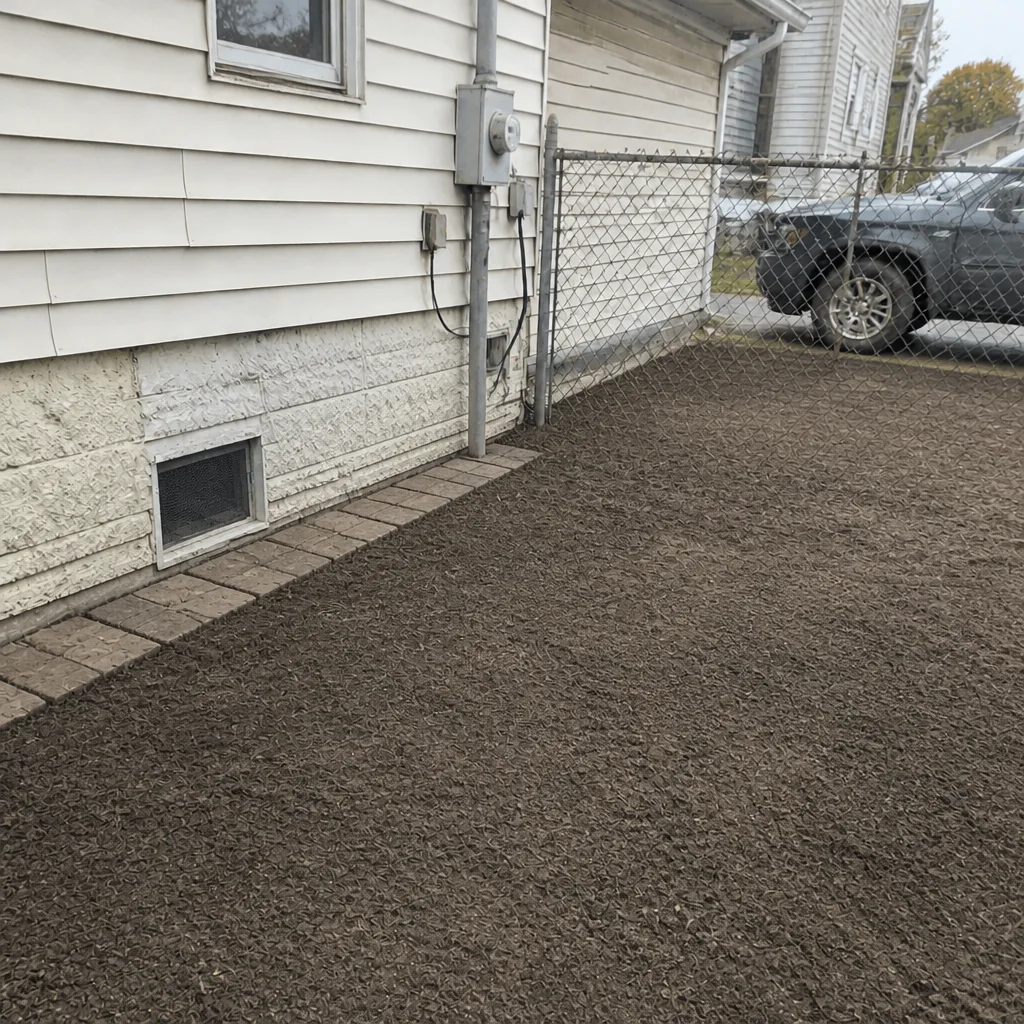
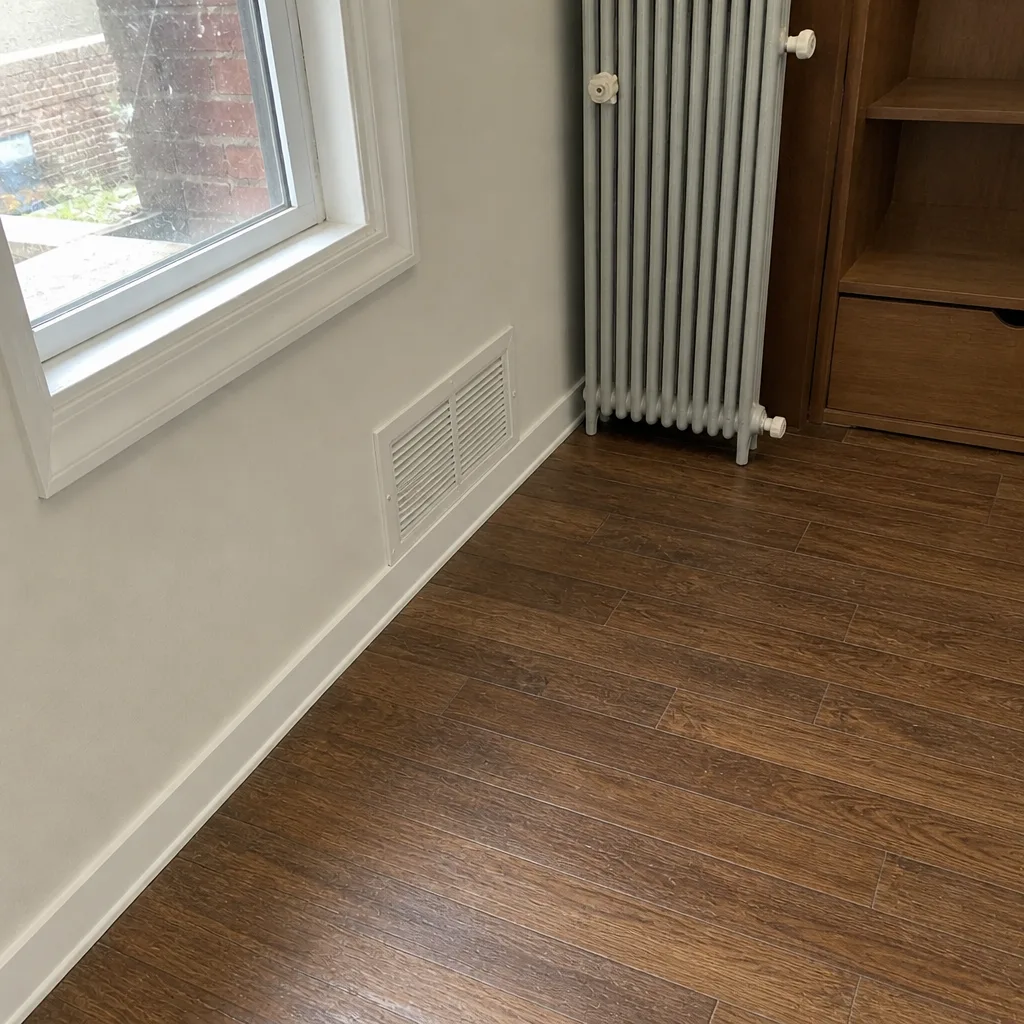
See the difference
 Before
 After
 Before
 After
 Before
 After
When to Call a Professional
Call a professional when three or more of the five-signal cluster show up together, when you’ve logged a pattern over two consecutive seasons, when you see visible mold growth at a register, when you find a rodent-affected duct run, when visible duct joints are taped with failing tape, or when your dryer vent flap is not opening fully. Each of those crosses the line from household maintenance into a job that needs professional equipment and training. If you’re in Harlem and your walkthrough found any of the above, get a professional read before assuming what the fix is. Air Duct Cleaning Harlem offers free estimates in Harlem – call (866) 937-8817. We answer 24/7. Fast dispatch from 7am to 7pm, Sunday through Friday.
Frequently Asked Questions
The most common cluster is visible debris at supply registers, uneven room temperatures, filters loading faster than usual, musty odors on startup, and worsening allergy symptoms indoors. When three or more of these show up together and recur across two seasons, it’s time for a professional inspection. Call (866) 937-8817 for an exact quote – estimates are free.
Air duct cleaning in Harlem is priced per system, not per vent, and the written estimate sets the final price before any work starts. Whole-system pricing depends on the size of the home, the number of duct runs, whether the ducts are accessible, and whether repair or sanitizing is needed alongside cleaning. Call (866) 937-8817 for a free estimate tailored to your system.
Cheap quotes usually skip containment and use equipment not designed for ductwork, which means a shop vacuum rather than a Rotobrush or Nikro system, and no negative-air setup. The debris that gets disturbed then redistributes through the home rather than being removed. A fair quote includes containment, purpose-built equipment, and a before-and-after inspection. Call (866) 937-8817 to see what a full job looks like.
Before-and-after visual confirmation of the duct interior is the standard a professional job stands behind, and you should see both. If a contractor can’t show you the inside of the ducts after the job, you have no way to know what was cleaned. Ask for photos before you book.
Most systems don’t need cleaning on a fixed calendar. The right interval depends on the housing stock, allergen load, pets, renovation activity nearby, and whether the duct runs have been wet. In older Harlem buildings where plaster dust from renovation work and rodent activity in wall chases are regular risks, inspections are worth running yearly, with cleaning scheduled when the warning-sign cluster appears. Call (866) 937-8817 if you’d like an inspection scheduled.
Cleaning signs are debris inside the ductwork with no visible gaps. Repair signs are dark seam lines, curling tape, separated runs, whistling, or a single room that never reaches temperature. Many older Harlem systems need some of both, which is why a proper inspection matters before anyone quotes you. Call (866) 937-8817 for a free estimate that maps out which need your system has.
The Bottom Line
Duct problems in Harlem almost never announce themselves dramatically – they accumulate as a cluster of small signals that are easy to explain away one at a time. Log the five-signal cluster, run a seasonal walkthrough, watch for the warning signs specific to older housing stock like plaster dust from renovation neighbors, rodent activity in wall chases, and failing duct tape at pre-code joints, and give the dryer vent its own dedicated check. When three or more signs line up, that’s the moment to call. Cleaning solves what’s inside the ducts; repair solves the duct system itself; airtight containment and purpose-built equipment are what separate a real job from a cheap one. Air Duct Cleaning Harlem offers free estimates in Harlem – call (866) 937-8817. We answer 24/7. Fast dispatch from 7am to 7pm, Sunday through Friday.
Written by the team at Air Duct Cleaning Harlem.