
Last updated November 22, 2026
 Whole-home duct cleaning
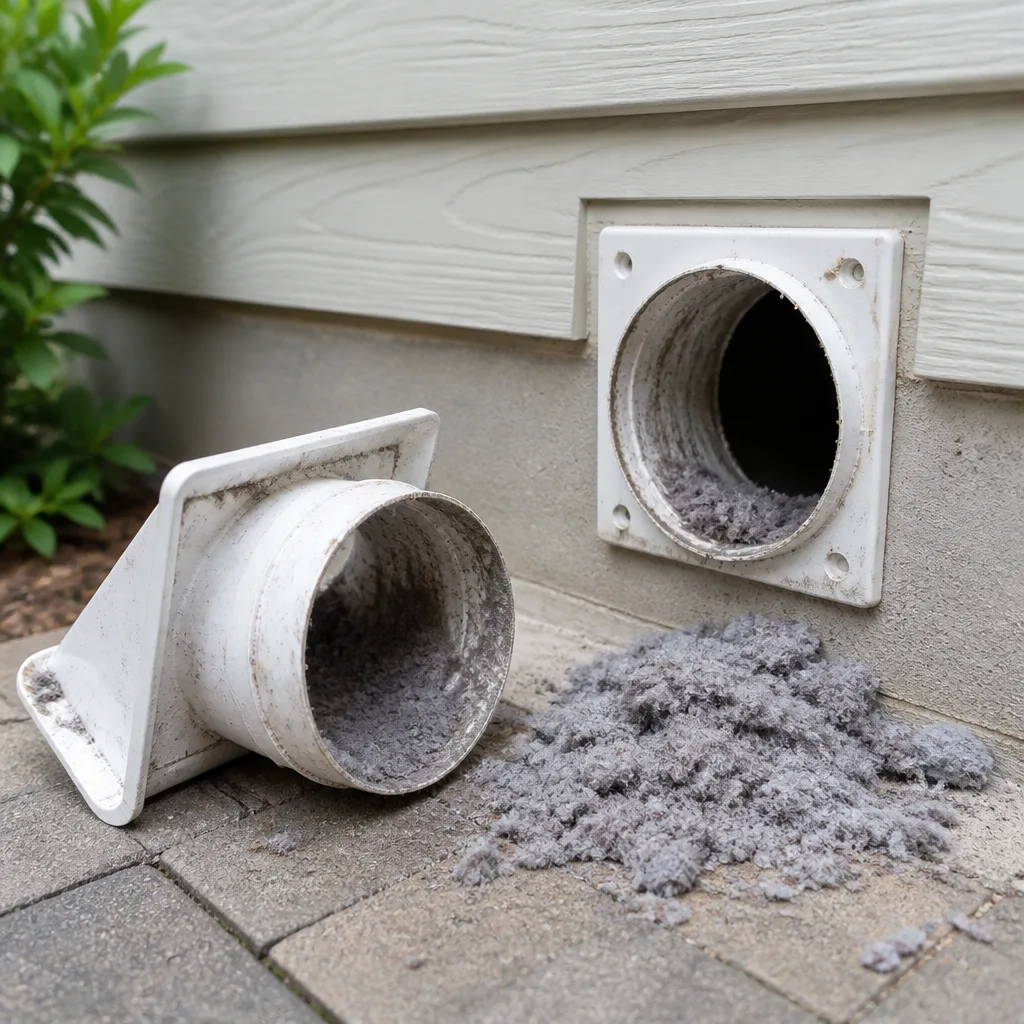 Dryer vent cleaning
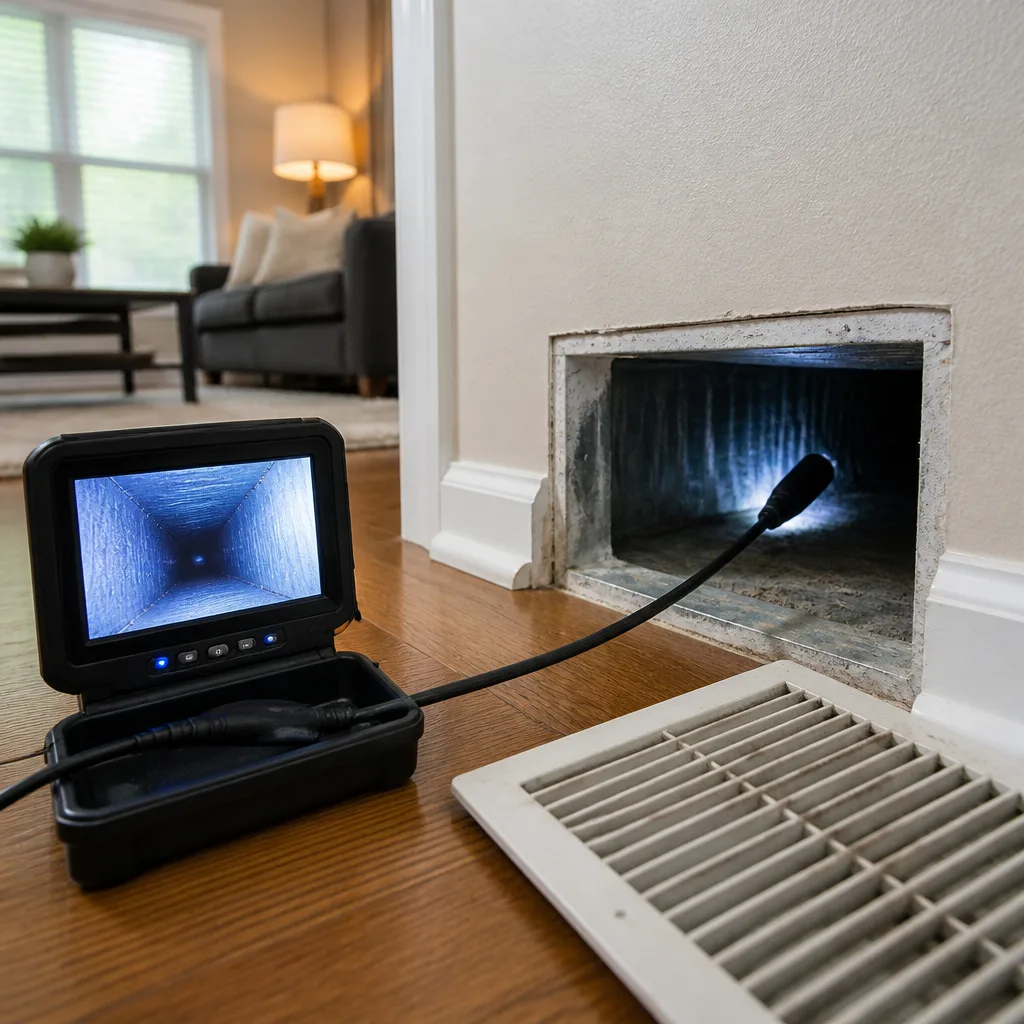 Camera inspection
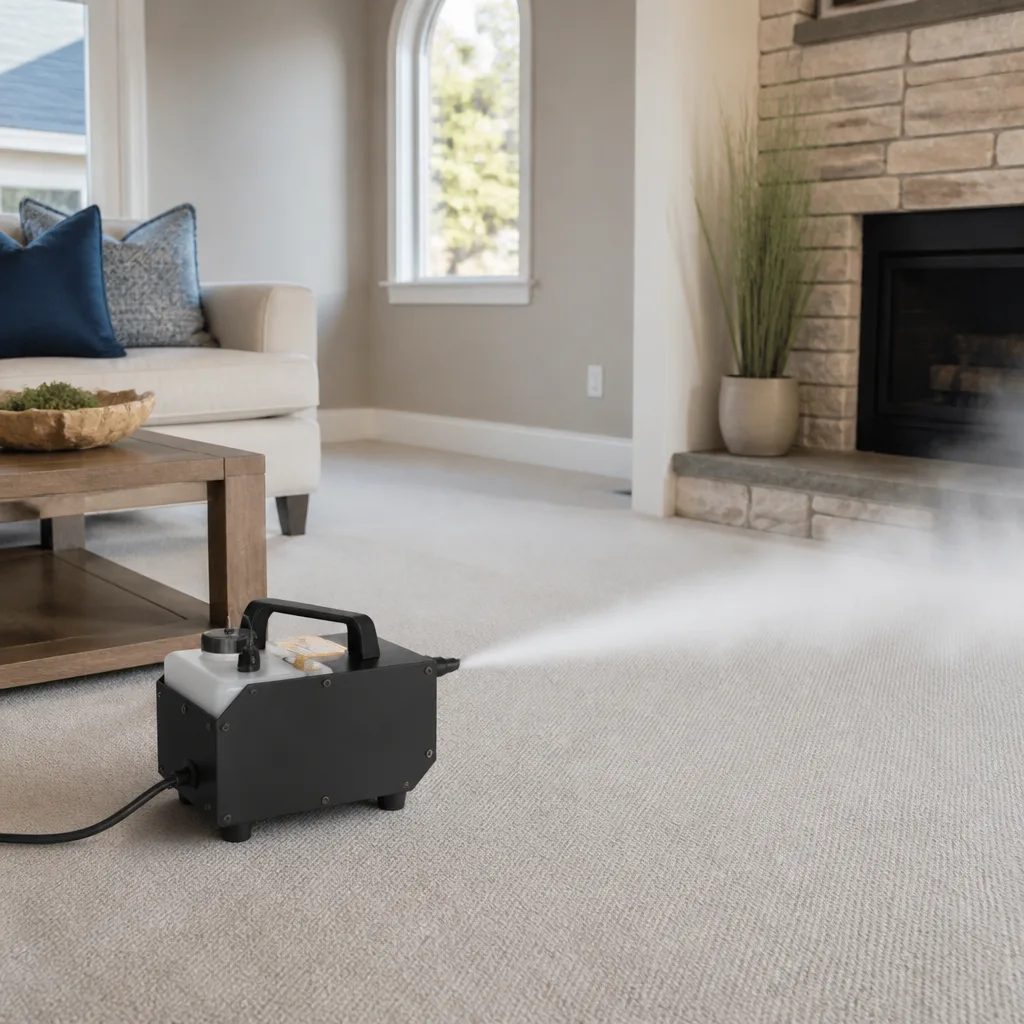 Sanitizing & deodorizing
Whole-system duct and dryer vent check with before-and-after photos - you see exactly what came out of your vents
That "$99 whole-house special" is a bait ad - the real number appears once they are in your hallway, or the "clean" is a shop-vac at the register. We photograph the inside of your ducts before and after instead.
Air Duct Cleaning Maintenance Checklist for Harlem Homeowners
The advice you’ll find online says to clean your ducts every three to five years. That rule was written for suburban houses with a single furnace, a full basement, and a yard between the house and the road. It has almost nothing to say about a Harlem apartment two floors up from a busy avenue, or a brownstone where the return air for three floors runs through one chase. Building type and street-level air both change how fast ductwork loads up. This checklist is built around those conditions: what to look at, how often, and when a visual check is no longer enough. It’s written for co-op, condo, townhouse and brownstone owners across Harlem.
Quick Answer
A workable Harlem duct maintenance routine checks supply and return registers monthly, weighs or swaps filters every one to three months depending on your building, and books a professional cleaning based on what the filters and registers tell you rather than a fixed calendar. Co-op and condo units with shared risers should also have a professional camera inspection on the same cadence. Dryer vents need their own separate check on a shorter cycle, since lint buildup is a fire risk in any multi-unit building.
Styles & brands we work with
- Whole-home duct cleaning
- Dryer vent cleaning
- Camera inspection
- Sanitizing & deodorizing
Table of Contents
- Why Harlem Duct Maintenance Isn’t a National Template
- Monthly Checks: Five Minutes at Each Register
- Quarterly Checks: Filters and Flex Connections
- Annual Checks: The Bigger Picture
- Checklist by Building Type: Co-op, Condo, Townhouse, Brownstone
- Reading Filter Loading Rate as a Fouling Gauge
- When to Escalate to a Professional Camera Inspection
- Dryer Vent Inspection: A Parallel Checklist Item
Why Harlem Duct Maintenance Isn’t a National Template
Most duct cleaning schedules assume a house breathes freely. In Harlem, the supply air often travels through a shared building riser before it ever reaches your unit, and the return air comes back down through the same shaft. That single design fact changes how often filters load and how quickly debris accumulates at the branches. A standalone house has its own duct system from end to end. A Harlem co-op unit usually has a segment of the building’s system and shares the main run with neighbors. When you change your filter, you are protecting your HVAC equipment, but you are not cleaning the whole riser.
Street-level air matters too. Harlem sits under a heavy traffic corridor with seasonal smog and a steady rhythm of construction and demolition. Fine particulate from brake dust, tire wear and building work gets pulled into return grilles, especially at street-facing units on lower floors. On days when the air outside is visibly hazy, more of that load lands in your filters. Neighborhoods like Central Harlem, Hamilton Heights and East Harlem all sit close enough to major roads and construction sites that a filter rated for a quiet suburb underperforms fast.
Central Harlem and East Harlem see more demoliton and renovation activity than quieter blocks, and those particles travel. If you live near an active site, or a building down the block has scaffolding up, expect your filter loading rate to speed up. In our experience, this is why “clean every three to five years” so often misses the mark here. The right interval follows the building and the block, not a national average.
Monthly Checks: Five Minutes at Each Register
This part needs no tools. Walk your unit once a month and look at every supply register and return grille. You’re looking for three things: visible dust film, dark streaking around the edges, and any change in the strength or smell of the airflow. Do this on the same day each month so you can compare results.
- Supply registers. Hold a white paper towel about an inch from the louvers while the fan runs. If a visible dust line appears within a minute, the duct behind that register is carrying noticeable particulate.
- Return grilles. Look at the filter face if it’s accessible without tools. A filter that turns gray or darkens visibly in under a month is loading faster than normal.
- Streaking. Dark streaks radiating from a supply register onto the wall or ceiling usually mean air is escaping around the boot, not just out of the grille.
- Airflow feel. A register that used to push air strongly and now barely moves it can indicate blockage or a damper issue, not just a dirty filter.
- Smell. A musty or dusty smell at one register and not others is a signal to escalate, not to keep watching.
These five checks cost nothing and tell you more than any single annual appointment. Log the results on your phone or a notepad. In Harlem, where filters load unevenly between street-facing and courtyard-facing rooms, a written log lets you spot which part of the unit needs attention first.
Quarterly Checks: Filters and Flex Connections
Every three months, do a filter check and a flex-duct check. That includes the filter on the air handler serving your unit, the return filter (if it’s accessible), and any flexible duct connections you can see in closets, utility spaces, or open basement ceilings. For co-op and condo owners, the filter that matters most is the one on your own air handler, even if the building manages the rest. That’s the one you can change.
- Filter loading. Hold the filter up to a light source. If you can’t see light through it, it’s overdue. If it’s only mildly gray, write the date and check again in 30 days to measure the loading rate.
- Flex duct joints. Run a hand along accessible flex duct connections at the air handler and at branch takeoffs. Loose tape, pulled collars or visible gaps let conditioned air escape and unfiltered air in.
- Duct straps and hangers. Sagging flex duct in a closet or utility space restricts airflow. Note the spot for a professional repair, not a homeowner fix.
- Insulation wrap. Any torn or missing insulation on accessible duct runs is worth flagging. It affects both efficiency and condensation in warm months.
- Air handler closet. Look at the floor and walls around the air handler for dust trails, which point to leaks even when you can’t see them directly.
In our work across Harlem, the most common quarterly finding in co-op and condo units is a flex duct collar that’s worked loose at the air handler. It’s easy to spot, and it’s the sort of thing that should be corrected by someone trained on the system, not taped by a homeowner reaching into a tight closet. Duct repair and sealing is a specialist job, and it’s the step that keeps the rest of the system working as designed.
Annual Checks: The Bigger Picture
Once a year, book a professional inspection or at least a full visual walkthrough with camera access. A proper inspection looks at what you can’t see: the inside of the main trunks, the condition of the riser segment serving your unit, microbial growth on interior surfaces, and the state of the air handler coil. It’s also the moment to schedule a cleaning if the monthly and quarterly logs point that way. Our technicians have up to 10 years of experience with this systems-level view, and that’s what you want when the question is “is the duct interior actually fouled or not?”
A professional inspection is also where the material quality of your space shows up. In older Harlem buildings, galvanized trunk duct is common, but so are sheet metal transitions and fiberglass-lined sections. Fiberglass liner that has begun to fray or shed inside the duct is a different cleaning problem than bare metal, and it’s one that needs the right equipment. That’s where professional systems like Rotobrush and Nikro come in: they’re purpose-built for duct interiors, not shop-vac substitutes. If you want a sense of what a full service looks like, our overview of air duct cleaning covers the process step by step.
Annual is also when you review the whole system: the air handler, the coil, the supply registers, the returns, and your dryer vent if it shares a utility closet with the HVAC. A whole-system pass catches the interactions a piecemeal check misses. Cleaning, sealing, sanitizing and air quality upgrades work together, and the annual review is where they get planned.
Checklist by Building Type: Co-op, Condo, Townhouse, Brownstone
The checklist changes with the building. National templates rarely distinguish between these, and that’s one of the reasons they under-serve Harlem owners.
Co-op and Condo Units
- Monthly: supply register paper-towel test, return filter look, airflow check.
- Quarterly: change your own air handler filter, check flex duct collars in closets.
- Annually: request a professional camera inspection and ask the building whether the shared riser was serviced in the last cycle. Get their records in writing.
- Board-level: if you serve on a co-op board, push for a building-wide riser cleaning on a fixed cadence. Individual unit cleanings don’t address the shared trunk.
Townhouses and Brownstones
- Monthly: same register check, plus a look at the return grille on each floor. Multi-floor brownstones often have one return serving three floors, which loads fast.
- Quarterly: check flex duct where it passes through open floor bays or closets. Brownstones frequently have exposed duct runs in the parlor level or basement that show damage early.
- Annually: camera inspection of the main trunks, plus a look at the coil and any basement-level air handler. Brownstone systems often have more duct length than they were originally designed for.
Single-Family Detached Homes
- Monthly: all registers and the main return.
- Quarterly: filter change, flex duct inspection at the air handler, insulation check on accessible runs.
- Annually: the closest thing to the national template, but still worth tightening to your block’s construction and traffic reality.
Whichever type you live in, HVAC cleaning is the companion service that handles the air handler and coil, which is where a lot of the debris the duct cleaning removes would otherwise settle.
Reading Filter Loading Rate as a Fouling Gauge
Your filter is the single best indicator of how fast your ducts are loading with particulate. A filter that reaches full load in three months in one apartment and six months in another is telling you something specific about the ducts between them. Track the number of days it takes a fresh filter to turn visibly gray. Write it down. That number is your loading rate, and every filter change resets the clock.
- 30 to 45 days to load: aggressive fouling. Likely street-facing, near construction, or on a system with a leaky return. Escalate to a professional inspection.
- 60 to 90 days to load: typical for a Harlem unit near a busy street or an active building site. Keep quarterly changes and watch for streaks at registers.
- 120 days or more: light fouling. A standard quarterly change is enough.
If the loading rate suddenly speeds up, don’t assume the system is dirty. A return duct that has pulled loose in a closet ceiling, a filter that’s seated badly in its frame, or a supply leak near a construction area will all shorten the interval by pulling in unfiltered air. That’s a repair conversation, not just a cleaning conversation. Our teams use Abatement Technologies air scrubbers and negative-air containment on every job specifically because the alternative – pushing dust back through the house while cleaning – just relocates the problem.
When to Escalate to a Professional Camera Inspection
Most of this checklist is homeowner observation. Camera inspection is the point where the specialist takes over. Escalate to a professional inspection when any of the following is true:
- Streaking appears at two or more registers and doesn’t clear after a filter change.
- Visible dust falling from a register when the fan starts.
- A musty smell that returns after cleaning the register area.
- Filter loading speeds up by more than a third between two consecutive filters.
- Airflow has clearly weakened at more than one register.
- Recent renovation in your unit or a neighboring building without air containment.
- A new move-in to an unfamiliar unit, where the previous owner’s maintenance history is unknown.
When you book the inspection, ask for three things in writing: before-and-after photos of the duct interior, a scope listing which runs were cleaned, and a written estimate if additional work is recommended. A professional using Rotobrush and Nikro systems has camera capability built into the process; the homeowner should not have to argue for the documentation. If a company won’t show you what they found and what they did, that’s the whole story.
Dryer Vent Inspection: A Parallel Checklist Item
Dryer vents get treated as an afterthought by most duct cleaners. In a Harlem multi-unit building they shouldn’t be. Lint is highly combustible, and the same building riser issue that affects your HVAC duct affects shared dryer vent runs. NYC fire code treats dryer vent maintenance as a code-compliance matter for building owners, which means co-op and condo boards carry a specific responsibility here. Your own responsibility is to check the connection from your dryer to the wall and to know when the run needs a professional pass.
- Monthly: look at the exterior vent flap (if visible) while the dryer runs. Sluggish or flapping-inward movement means the run is restricted.
- Monthly: clean the lint trap and check the flexible connector behind the dryer for kinks or crush points.
- Every three months: feel the exterior of the vent run during a cycle. Warm spots suggest heat retention that shouldn’t be there.
- Annually: schedule professional dryer vent cleaning, especially in a co-op or condo where the vent shares a building run.
- Immediately: if clothes take noticeably longer to dry in successive cycles, if the exterior vent is blocked, or if you see lint accumulating near the vent opening.
If you own or manage a multi-unit building in Harlem, ask your building manager whether the shared dryer vent run is on a documented cleaning schedule. That’s a question worth asking on the record, because the code interest is real and the fire risk is real. On the HVAC side, cleaning, repair and sealing all belong in a single plan with the ventilation side; splitting them across contractors is how small problems get missed.
Common Mistakes to Avoid
- Following the national three-to-five-year rule without watching your own filter. That interval assumes a suburban house. In a Harlem co-op unit or brownstone, the filter loading rate is a better measure.
- Cleaning your own ducts with a shop-vac. A shop vac doesn’t have the volume or containment to clean a real duct run, and it redistributes fine particulate back through the unit. Professional systems like Rotobrush and Nikro exist for exactly this reason.
- Skipping the shared riser. If your building’s main run wasn’t cleaned in the last cycle, cleaning your own branches is a partial fix. Ask the board for the riser schedule.
- Treating dryer vents as an upsell. Dryer vent cleaning is a fire-safety and code item, not a line item to skip. Get it done on its own schedule.
- Not asking for documentation. A cleaning you can’t verify is a cleaning you can’t trust. Request before-and-after photos and a scope of work, every time.
- Ignoring flex duct joints. Loose collars and pulled tape at flex connections let filtered air escape and unfiltered air in. They get worse over time.
- Cleaning ducts and skipping the coil. The air handler coil is where a lot of the removed debris was headed. If it’s fouled, clean it too.
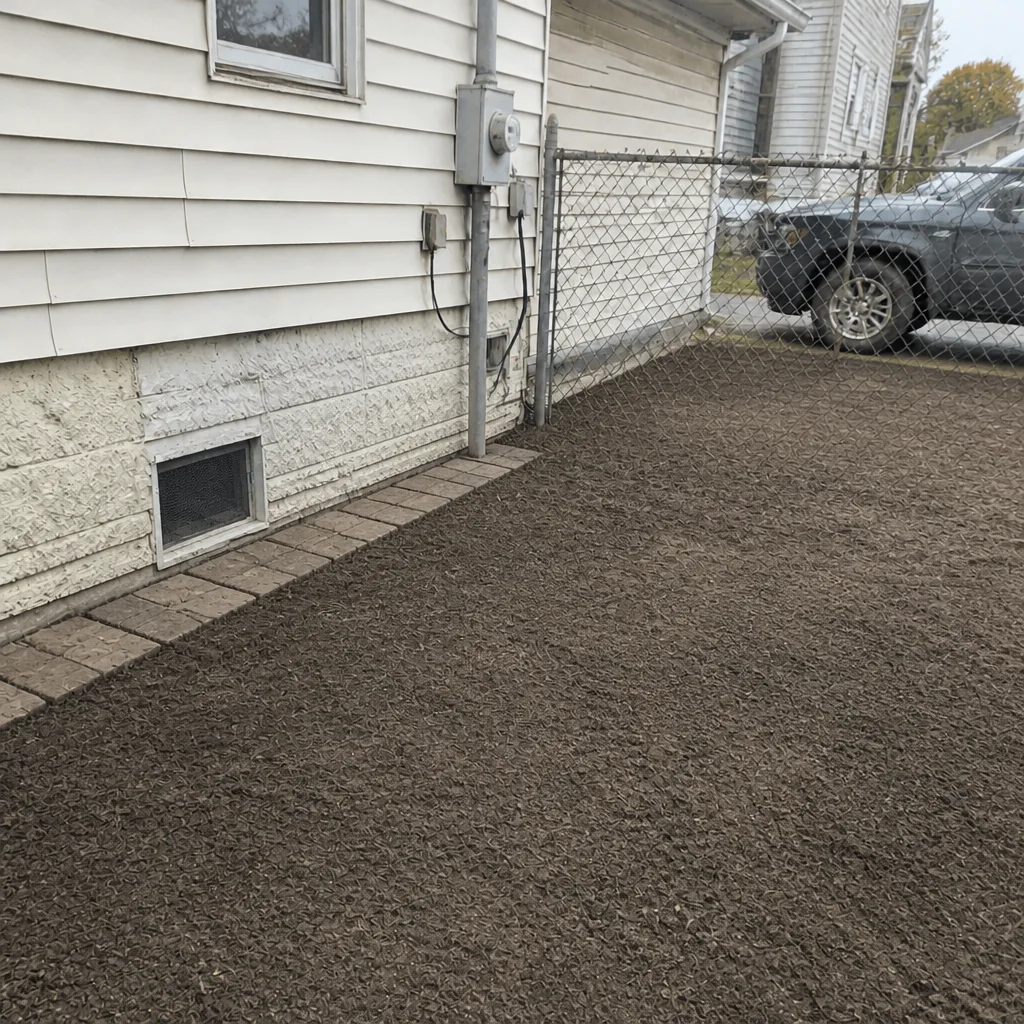
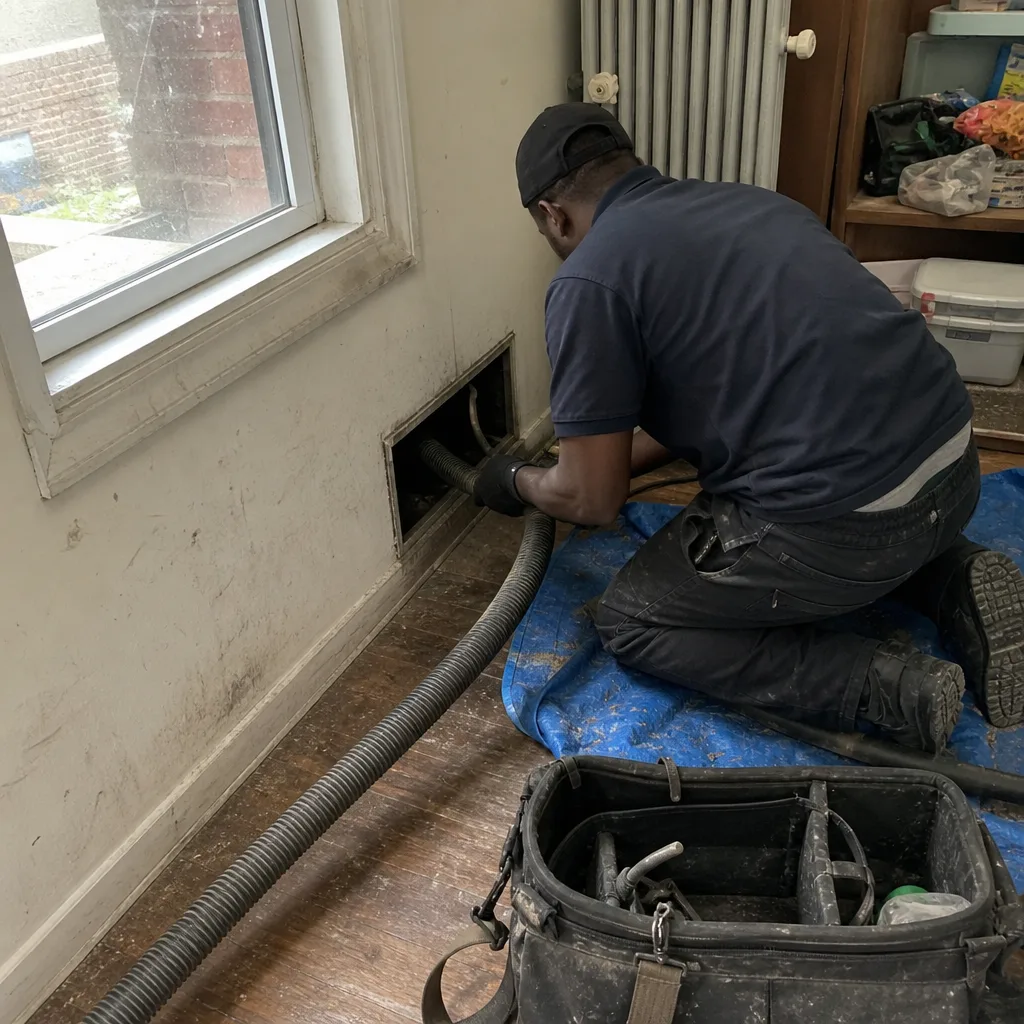
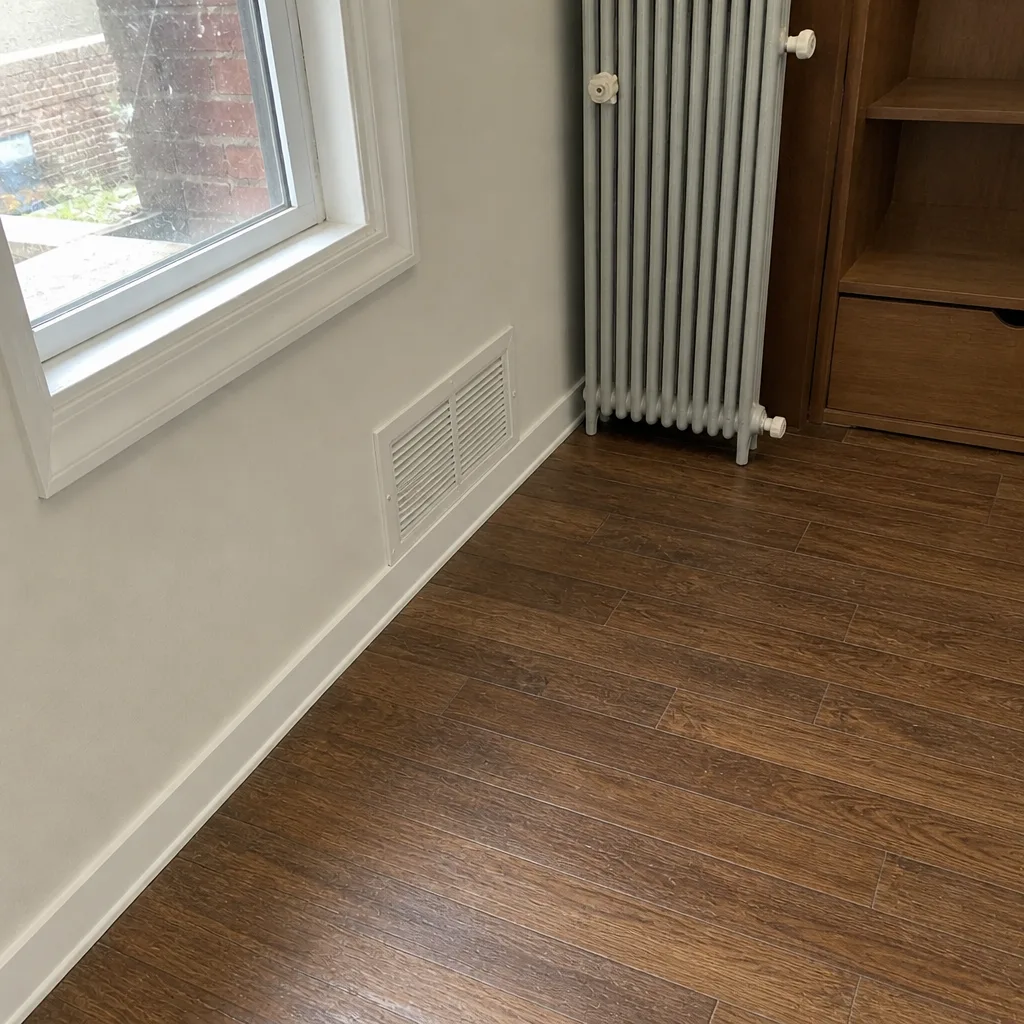
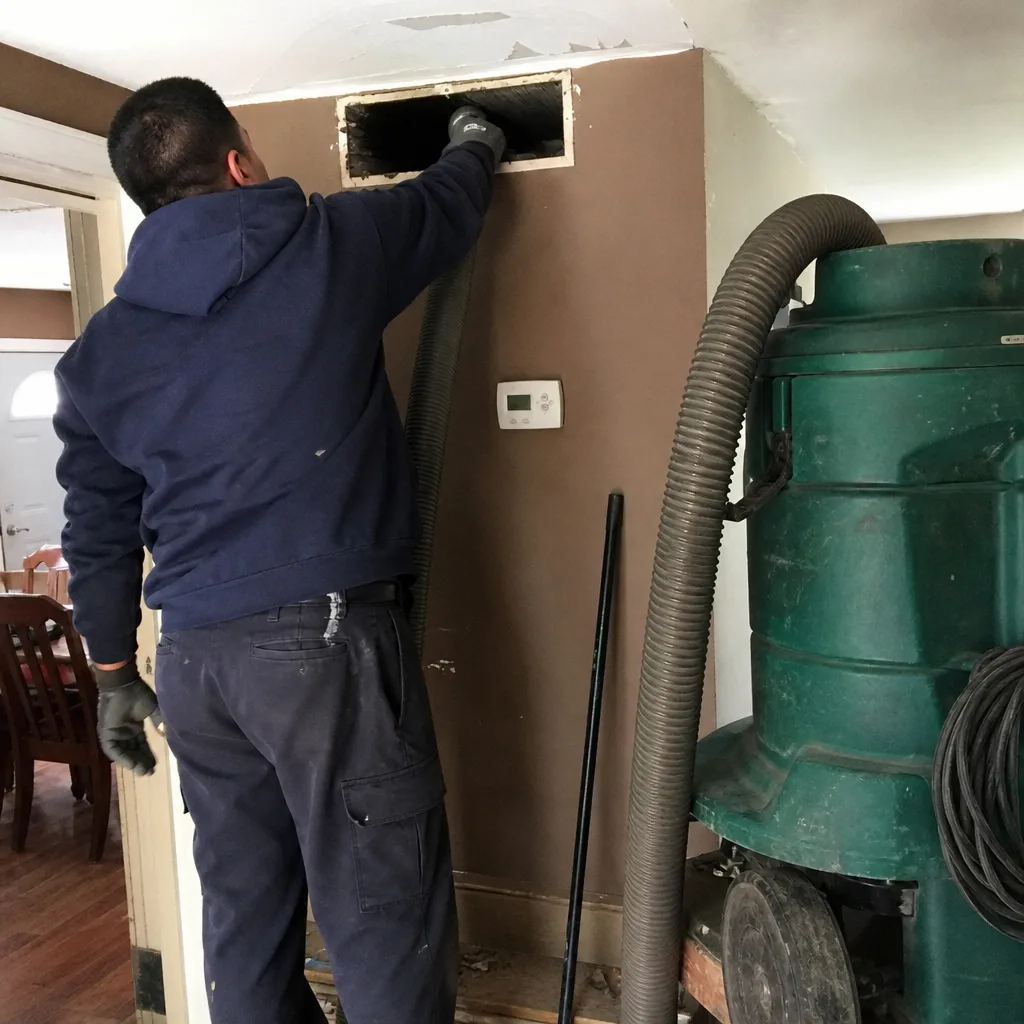
See the difference
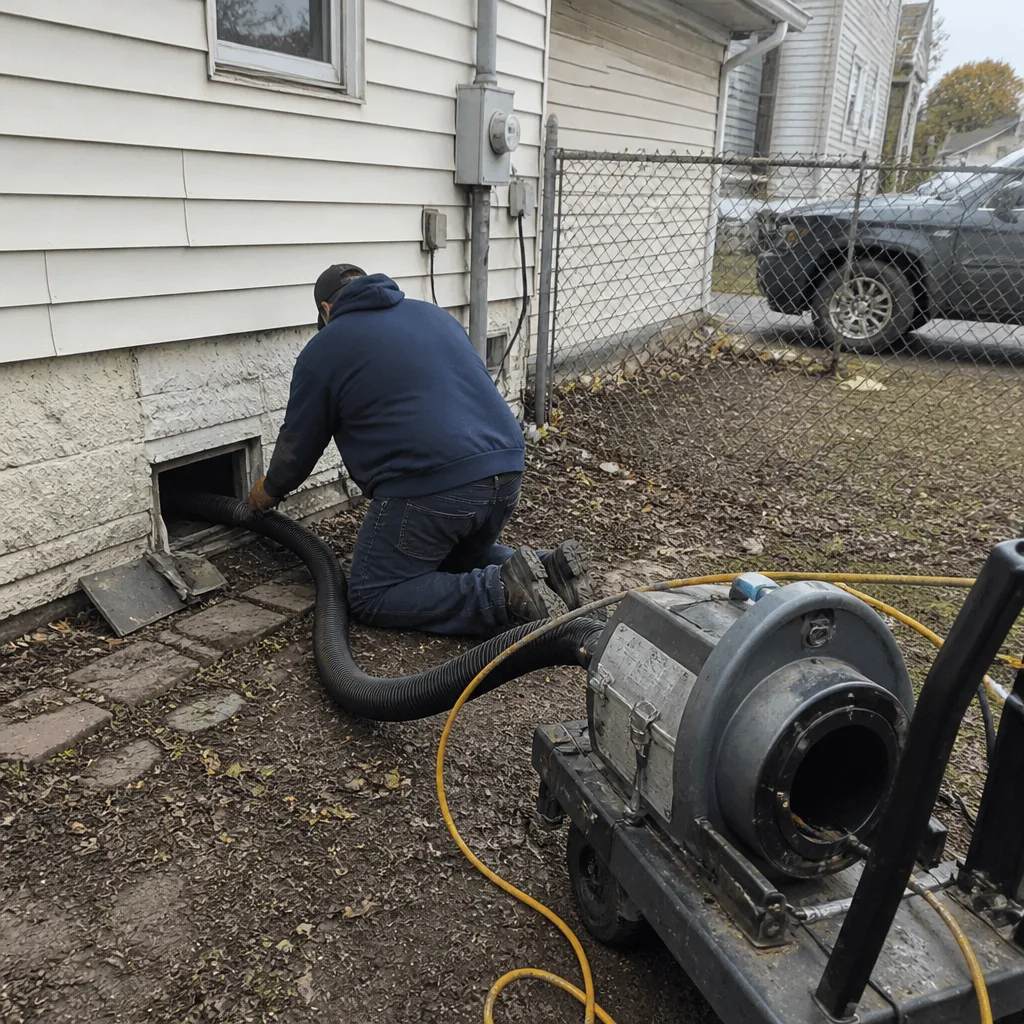 Before
 After
 Before
 After
 Before
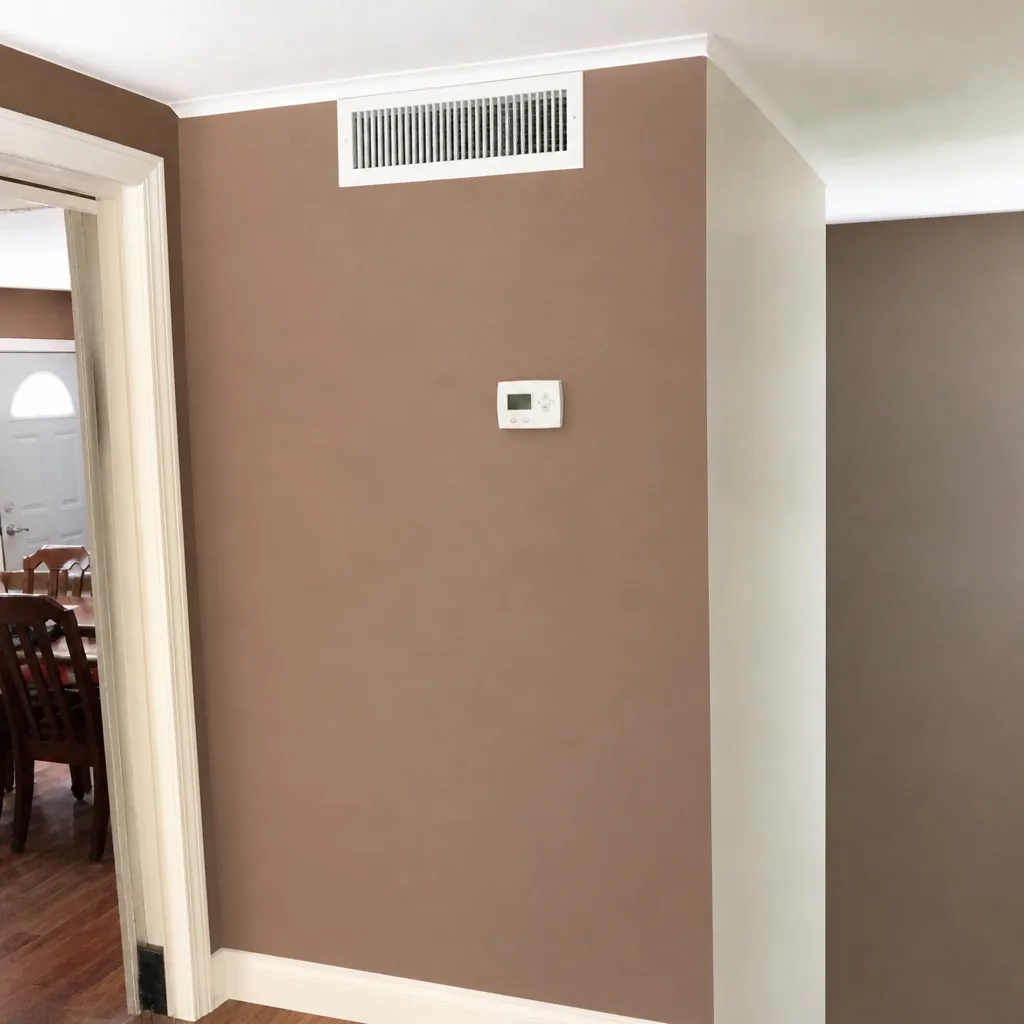 After
When to Call a Professional
Call a professional when your monthly and quarterly checks turn up anything you can’t resolve with a filter change and a visual inspection. That means recurring register streaking, dust falling from a vent when the fan runs, a musty smell that returns after cleaning, filter loading accelerating faster than expected, or airflow weakening at more than one register. It also means any co-op or condo unit where the shared riser’s cleaning history is unknown, and any building that has been through recent renovation without air containment.
Book the dryer vent on the same call if it’s due. The two services belong on one schedule because they’re the same kind of problem: a hidden system with accumulated debris and a long interval between inspections. If your building sits near active construction, or your unit is street-facing on a busy Harlem block, bring the inspection forward rather than waiting for the next interval.
Air Duct Cleaning Harlem offers free estimates in Harlem. Call (866) 937-8817. We answer 24/7. Fast dispatch from 7am to 7pm, Sunday through Friday.
Frequently Asked Questions
Often enough to match what your filter is telling you, which in Harlem usually means every two to four years rather than every three to five. A street-facing co-op unit near heavy traffic may need a professional cleaning closer to the two-year mark. Track your filter loading rate and use it, not the calendar, to set the interval.
Usually not. A building-wide riser cleaning handles the shared trunk, not the branches and registers inside your own unit. Ask the board for the last service date and scope in writing, then schedule your own inspection if your unit’s branches weren’t included. That’s the part of the system your monthly checks actually monitor.
A professional cleaning uses purpose-built systems with enough suction volume, brush agitation and active containment to clean and hold the debris, while a shop-vac pushes fine particulate back into the air. Professional systems like Rotobrush and Nikro are designed for duct interiors; Abatement Technologies air scrubbers run during the job to contain what’s loosened. A shop-vac can’t do either.
No. Dryer vent cleaning belongs on a shorter, separate cycle because lint accumulation is a fire-safety issue and NYC fire code treats it as a compliance matter in multi-unit buildings. An annual cleaning is the baseline; check the exterior vent flap monthly and the back of the dryer more often in a co-op or condo.
Sometimes yes. Clean registers show the first few feet of a duct run, not the main trunk or the riser segment. Book a camera inspection when you move into an unfamiliar unit, after a renovation, or when the filter loading rate speeds up without an obvious explanation. It’s the only way to see what’s actually inside the runs.
You can do the monthly and quarterly parts without tools, and you should – it’s the most useful information about your system you’ll ever have. The annual camera inspection, cleaning, duct sealing and dryer vent work should go to a specialist. The equipment and the documentation are what you’re paying for, not just the labor.
The Bottom Line
A Harlem duct maintenance checklist works when it’s built for Harlem conditions: shared risers, street-level particulate, construction activity, and a real linter in the dryer vent. Watch your registers monthly, your filters quarterly, and your whole system annually. Use the filter loading rate as your guide to when cleaning is actually due. Keep the dryer vent on its own shorter cycle. And when you escalate, ask for the paperwork: before-and-after photos, a scope of work, and a written estimate. If you want a single specialized team handling cleaning, sealing, sanitizing and air quality upgrades together, that’s what we do. Call (866) 937-8817 for a free estimate. We answer 24/7. Fast dispatch from 7am to 7pm, Sunday through Friday.
Written by the team at Air Duct Cleaning Harlem.